Key Points and Methods of Cowpea Cultivation Explained in Detail
Cowpea, also called yardlong bean, is commonly sown and planted in spring in the south and forms pods in summer. It is a common vegetable grown by farming households, with many cultivated varieties and a relatively long history of cultivation, and there is much cultivation experience. A farmer who often grows it will also know a lot of related cultivation techniques, but there are also some things that everyone may not have noticed, which need to be introduced to everyone.
I. Selecting Varieties
When planting, pay attention to selecting some varieties with strong adaptability that can adapt to the local environment, such as heat-tolerant and drought-tolerant varieties. In various places there are also many local varieties specially bred for the locality, or local seed lines that farmers have kept passing down for growing.
II. Selecting Land
It is necessary to choose deep soil, so that the root system grows better. The cowpea root system is not very strong and is afraid of flooding; flooding easily causes root rot, so it can be planted in places with a lower groundwater level or in high-lying places. Farmers in the south often plant it on field ridges, but it is still better not to plant it on sloping land, as water supply is inconvenient. Loose sandy loam soil in the field is best.
III. Fertilizing
The base fertilizer should be applied together with the soil when preparing the land, and then the soil should be plowed fine and mixed together. After planting, it needs to be watered thoroughly to promote root growth. The first topdressing is before flowering, applying a quick-acting compound fertilizer to promote flower bud differentiation and ensure flowering; the second is at the early podding stage, applying more fertilizer to promote more podding and full pods; the last is at the late podding stage, applying more phosphorus and potassium fertilizer in order to extend the podding period.
IV. Field Management
1. Replanting and Trellising
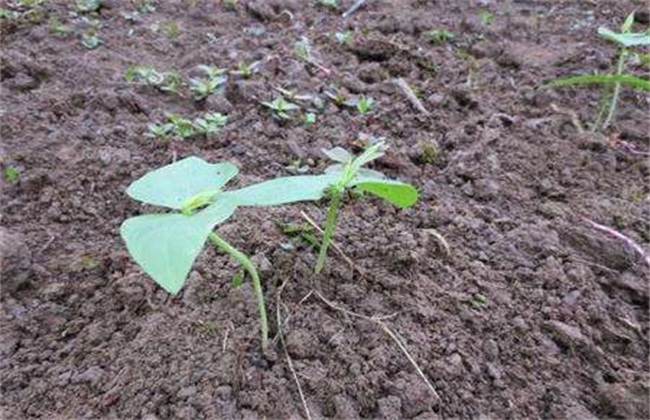
Direct sowing, no need for raising seedlings. If most have emerged and some have not emerged, you can open the soil to check; most are likely rotted or eaten by insects, and can be replanted. When the seedlings grow to 30 cm long, trellises must be set up to let the plants grow upward, otherwise they will become tangled with the plants. For trellising, generally bamboo strips are used; three bamboo strips per plant are inserted into the soil at even angles, and the tops are tied together with rope.
2. Adjusting the Structure
Because the branches and vines have strong sprouting ability, pruning must be done to ensure a good plant structure. During the flowering and podding stage, leaf buds should be removed to avoid sprouting and competing for the nutrients of flower buds. There should not be too many new shoots. When the plants are vigorous, leave more lateral branches to bear pods, and avoid excessive vegetative growth of lateral vines.
The basic content of cowpea cultivation is variety selection, land selection, fertilizing, and watering. The key content is trellising and pruning, maintaining good growth vigor, concentrating nutrients, and adjusting pod-bearing branches, all of which are the main management content, and are also for making management more convenient.