What causes leaf curl in eggplant?
When growing eggplant, the leaves often curl. Why does this happen? There are many contributing causes, and the main ones are related to growing environment conditions and external stimuli. In some cases we can basically prevent eggplant leaf curl, but first you still have to find the specific cause and identify what is causing the curling. Let's take a look together now!
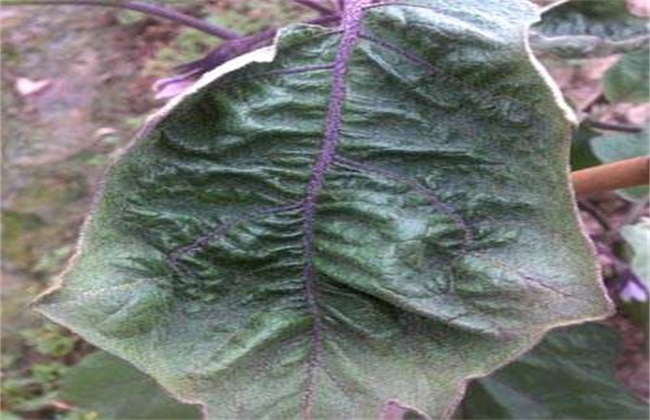
1. Nutrient deficiency
Eggplant growth requires certain trace elements, and when the plant lacks them, abnormal reactions appear. For example, a deficiency of boron and calcium can cause leaf curl. This kind of curling caused by nutrient deficiency is also a physiological disorder. Growth imbalance will lead to leaf curl. It is best to use some boron fertilizer and calcium fertilizer together during the eggplant seedling stage, and foliar spraying can also be done later. It can also be sprayed after the leaves curl, and it will improve after a period of time.
1. Viral disease
After eggplant is infected with a viral disease, leaf curl also occurs, but in addition to curling there are also some wrinkling and plant stunting, which are relatively easy to distinguish and identify. Once it is confirmed to be a viral disease, you can promptly buy the corresponding biological pesticide and use it, to avoid the plant withering after the disease becomes severe. It is best to treat it promptly, otherwise the disease will spread through sap friction during field farming operations.
3. Tea yellow mite
This kind of mite commonly damages eggplant, mainly gathering at the position of the calyx to suck the sap of the eggplant, and eventually spots and yellowing appear. Severely damaged leaves will curl, mainly curling toward the underside of the leaf, which can be identified. Sometimes the leaves become severely twisted and deformed, and sometimes it is also easy to confuse, so observe carefully. At the peak of occurrence, in the late growth stage of eggplant, you can use a 3000-fold solution of 80% abamectin emulsifiable concentrate or a 2500-fold solution of 3% propargite emulsifiable concentrate diluted with water and spray it.
4. Temperature and humidity
The late growth stage of eggplant happens to be summer. At this time, when temperatures are high, there is also a lot of rain. High temperature and high humidity mainly lead to insect pests and diseases, affecting plant growth. It is best to plant on higher sloping land, with a suitable planting density, not too dense, and field humidity will be reduced a lot. Drought and high temperature will be even more severe, so there must be a water source and timely irrigation.
Eggplant leaf curl is a common phenomenon, but to control it you must grasp the root cause in order to control it effectively. However, planting management must take all causes into account. It is best to carry out comprehensive prevention and not give eggplant leaf curl any chance, but most of the time it is only discovered after the leaves curl, and treatment is also very important.