What causes premature bolting in cabbage
Cabbage is a herbaceous plant of the cruciferous family (Brassicaceae) and is fairly widely distributed across both northern and southern China. In cultivation, cabbage often suffers from premature bolting, mainly because the organs form too early, leading to flower bud differentiation. This has a very large impact on cabbage yield, and growers' returns decline as a result. So what causes premature bolting in cabbage? Let's take a look below!
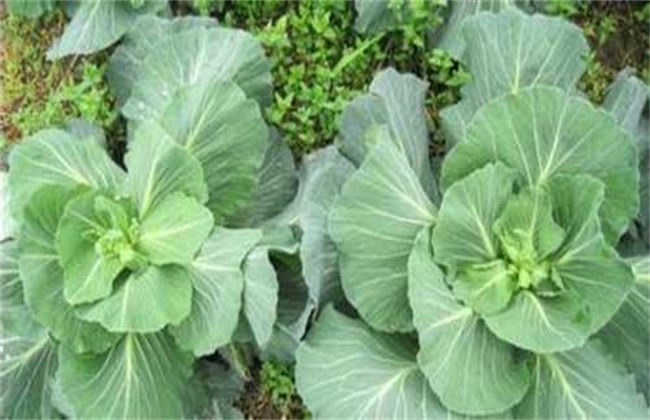
1. Seedling size
Seedling-related factors are inseparable from premature bolting in cabbage. Seedling size has two measures: calendar seedling age and physiological seedling age. When growing the same variety, if the calendar seedling age is the same, then the fast-growing ones - that is, those with a larger physiological seedling age - are more likely to be affected by low temperatures and undergo vernalization. Under normal conditions, the vernalization standard for seedlings is generally around 6 leaves. When the leaf area is 7 cm and the stem is about 0.5 cm thick, the bolting rate of the seedlings is relatively high, so we should pay attention to controlling seedling size to reduce premature bolting.
2. Temperature during the seedling stage
Temperature also has a direct effect on seedling growth. If the temperature during the seedling stage is relatively high, seedling growth speeds up somewhat, but large seedlings are also very easily formed. And if the seedlings are too large, the probability of vernalization increases, which in turn raises the bolting rate. So when growing cabbage, we should adjust the sowing period reasonably according to the seedling-raising method, keeping the temperature within the range suitable for cabbage growth. By controlling temperature to control seedling size - keeping the temperature at around 15 degrees when raising cabbage seedlings - the bolting rate can be effectively reduced.
3. Planting time
Planting time is also one of the main causes of premature bolting in cabbage. If planting is too early, the seedlings are prone to late spring cold, which delays seedling recovery and increases the bolting rate. But planting too late is also not an option: if planting is too late, the cabbage growing period is prolonged, and it cannot form a large head in a suitable environment, ultimately ending up as a half-grown plant. So we should control planting time reasonably according to the growing region. For example, when growing in the north, planting should be suitably delayed, whereas in the south it should be suitably earlier. This can effectively avoid or reduce premature bolting in cabbage.
4. Climatic causes
The last cause of premature bolting in cabbage is an unsuitable climate and environment. With early-maturing cabbage varieties, if temperatures are high during winter growing, seedling growth is accelerated, and then late spring cold occurs after spring arrives, so premature bolting in cabbage is very easily caused. When overwintering cabbage is grown in the south, because autumn is wet and winter arrives quickly, cabbage growth is inhibited. It very easily overwinters before forming a head, and then when the long-day climate of spring arrives, premature bolting readily occurs. Especially in winters that are warm and springs that are cold, the bolting probability is relatively high.
The above is a brief introduction to premature bolting in cabbage. There are many causes of premature bolting in cabbage, and we mainly focus on prevention, strengthening management in all aspects. Only then can the bolting phenomenon be effectively reduced. That is all for today's introduction; this article is for reference only, and we hope it can help everyone!