What causes ginger root rot
Ginger is an important seasoning vegetable with a relatively high market price, and many growers plant ginger to increase their income. However, the main harvested part of ginger, the stem, grows underground, and for various reasons ginger is very prone to rotting during growth. Here we mainly introduce the main causes of ginger rot and how to prevent and control it. How to prevent rotten ginger.
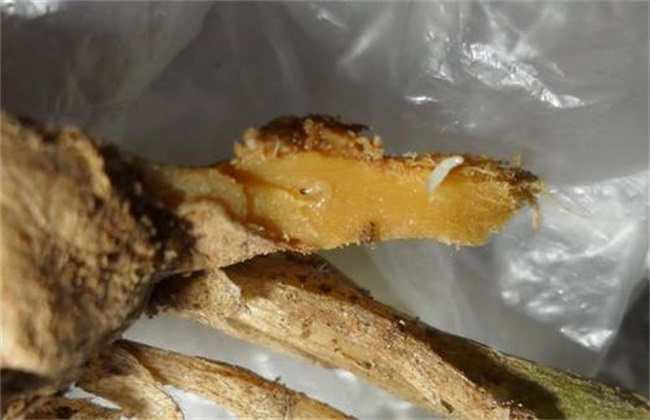
1. Excessive fertilization
Ginger is tolerant of fertilizer, but it only needs to be given as much as it requires. Some farmers, however, apply chemical fertilizer excessively. Do not fertilize blindly. Generally, in one growth cycle, in addition to the base fertilizer, it is top-dressed twice more. The first top-dressing is when the plant grows to 30 to 40 cm, mainly applying farmyard manure, at 800 kg per mu. The other is in summer when the ginger begins to root, applying 1000 kg of farmyard manure per mu. After that, do not top-dress again. Too much top-dressing cannot be absorbed by the roots and will cause root rot in the soil. Fertilize according to need, do not use too high a fertilizer concentration, and apply more farmyard manure.
2. Improper fertilization
Some chemical fertilizers and compound fertilizers are highly concentrated. If the fertilizer is not dissolved in water, is not diluted, or is applied too close to the rhizome, burying the chemical fertilizer underground after application will damage the roots. Apply less chemical fertilizer; for farmyard manure, poultry manure is used. Poultry manure is too hot in nature and will scorch the roots, and once it comes into contact with water it rots away. So apply less chemical fertilizer, and when applying chemical fertilizer keep it farther away; do not cover or bury it.
3. Caused by disease
The main diseases causing rotten ginger include ginger blast, which is mainly carried and transmitted by seeds and soil, and after infection the ginger will rot. So you can use a 800-fold solution of 50% carbendazim, 0.2% potassium dihydrogen phosphate, 0.2% borax, and a 800-fold solution of dexon to soak the seeds; use 60 kg of agricultural potassium carbonate per mu for soil disinfection treatment; when field disease occurs, use a 600-fold solution of dexon to drench the roots for treatment.
4. High temperature and high humidity
In summer, during the season when ginger rhizomes grow, the temperature is very high, and most areas have a lot of rain. If at this time the planting site is relatively low, the soil is relatively clayey, and water retention is too good, water will accumulate after heavy rain, and being damp and hot, the rhizomes cannot breathe and are prone to rotting. Therefore, it must be planted in a place with a lower groundwater level, on higher ground with smooth drainage; for flat land, multiple drainage channels must be dug to drain water in time, and plant ash should be spread to absorb moisture.
Ginger rot is mainly caused by pathogen damage or by the effects of the natural environment. Therefore, every effort must be made to create a good growing environment; with a good growing environment, there will also be far fewer pathogens. The soil must be disinfected to purify the growing environment.