Field Management Methods and Technical Key Points for Cherry Radishes
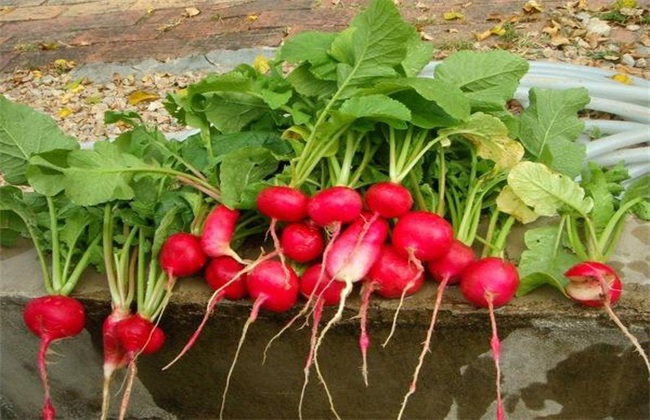
The cherry radish is a small variety of radish, and also a four-season radish. Because its size is small and its color and appearance resemble cherries, it is called the cherry radish. The cherry radish grows quickly, is rich in nutritional value, and can be eaten raw. So nowadays the planting area of cherry radishes is also relatively large. So how should cherry radishes be managed when growing them? Let's take a look together below!
1. Reasonable watering
The cherry radish grows relatively quickly and is suitable for dense planting, so it has a relatively large demand for water. After sowing, we should pay attention to watering properly to promote the growth of cherry radishes. To improve the yield and quality of cherry radishes, about half a month after sowing the cherry radish, the root begins to expand, so more water should be given; about three days before harvest, the amount of watering should be appropriately reduced. If there is too much water at this time, it can easily lead to cracking. But the water should not be too little either, otherwise it will increase the spiciness of the radish and lower its quality.
2. Thinning and final spacing of seedlings
About 3 days after sowing the cherry radish, the seeds can germinate and emerge. When the seedlings grow about two true leaves, thinning can begin. Thinning should follow the principle of removing the weak and keeping the strong, pulling out seedlings that are weak in growth, affected by pests and diseases, or too crowded, to promote strong seedlings. The spacing between each seedling should be controlled at about 10cm; it should not be too dense, otherwise the seedling leaves can easily turn yellow and the taproot color becomes dull. But it should not be too sparse either, otherwise it will have a certain impact on yield. During the entire seedling period, thin about three times, and after each thinning, water properly once.
3. Scientific fertilization
As just mentioned, the cherry radish grows quickly, so it not only has a large demand for water, but also consumes relatively more nutrients. We should not only apply sufficient base fertilizer, but also apply about three supplementary fertilizations as appropriate according to soil fertility and the growth of the cherry radish. When 3 true leaves have grown, carry out the first supplementary fertilization, controlling the fertilizer concentration well, mainly with urea. When the fifth leaf grows, the taproot of the cherry radish begins to expand. At this time, not only should an appropriate amount of urea be applied, but it should also be combined with an appropriate amount of potassium chloride; before applying potassium chloride, it should be dissolved.
4. Cultivation and weeding
Cultivation and weeding is also an indispensable management task in growing cherry radishes. Especially when planting in autumn, because the cherry radish plant itself is relatively small, and the early growth stage is in a high-temperature and high-humidity environment. This kind of environment is very favorable for weed growth, so weeding must be done well. Weeding can not only prevent weeds from taking away the nutrients of cherry radishes, but also improve soil permeability. Moreover, proper cultivation can also effectively improve soil structure and avoid soil compaction.
The above is a brief introduction to the field management methods for cherry radishes. Among them, we should also do a good job in the prevention and control of pests and diseases. If prevention and control are improper, it will have a serious impact on the yield and quality of cherry radishes, so everyone must pay close attention. That is all for today's introduction. This article is for reference only, and I hope it can help everyone!