What common cultivated varieties of amaranth are there? Understand clearly before planting
Amaranth is mainly divided into three major types: green amaranth 1, red amaranth, and colorful amaranth, among which there are many high-quality varieties. Generally, when planting, you should choose varieties suitable for the local area and with excellent traits themselves. At present, because amaranth tastes good and has strong adaptability, many people like it. Some people want to grow amaranth, but they also need to consider which variety to plant. It is hoped that this introduction can help everyone understand amaranth varieties.
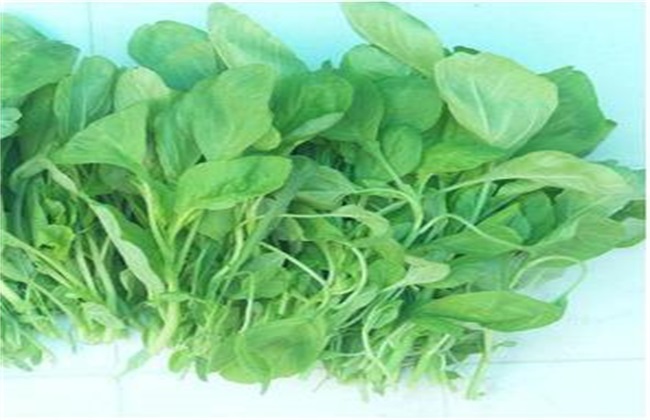
I. Green amaranth
1. Green rice amaranth
A Shanghai variety. Its advantages are vigorous growth, strong branching ability, and fast growth speed. It can be directly broadcast sown. The leaves are generally ovate, the leaf color is relatively light, appearing yellow-green, and the leaves are slightly wrinkled. The taste is relatively tender, and the flesh is relatively thick. It is relatively heat-tolerant and is a high-quality mid-maturing variety with very high yield, about 1,800 kg per mu. In the Yangtze River Basin, sow in spring and autumn.
2. Willow-leaf amaranth
A Guangzhou variety. Its characteristic is that the leaves are lanceolate, the edges are slightly curled, the leaf tips are pointed, and the petioles are white. Unlike green rice amaranth, green rice amaranth is all green. It is tolerant to both heat and cold. In addition to open-field cultivation, it is very suitable for protected cultivation.
II. Colorful amaranth
1. Pointed-leaf red rice amaranth
A Changhai variety. The leaves are also long-ovate and relatively long, and the leaves are also pointed. The main features are purple-red leaf veins and green leaf edges. The petioles are also red. It is generally an early-maturing variety. It is not very heat-tolerant, and the leaves are not very cold-tolerant.
2. Round-leaf flower red
Its characteristic is that the leaves are relatively round with slight wrinkles. Like pointed-leaf red rice amaranth, the leaf edges are green, but the area near the leaf veins is completely red. It is relatively heat-tolerant, more heat-tolerant than red rice amaranth, but its quality is not the best. It is generally sown in March and August. Its advantage is that bolting is relatively late, so it can be harvested more times, and the yield is medium, about 1,500 kg per mu.
III. Red amaranth
1. Round-leaf red amaranth
Its growth vigor is as vigorous as green rice amaranth. Its advantages are thicker stems and good branching ability. It is not only heat-tolerant and cold-tolerant, but also moisture-tolerant, and can be planted in relatively moist soil. Its characteristic is that there is more green on the leaf edges, and the purple-red color is near the petiole part.
2. Large round red amaranth
Its characteristic is bright red color, very little green on the edges, and not many leaf wrinkles. Its advantages are that it is tender and weak-textured, has no old fibers, and tastes relatively soft. It is mainly cultivated in summer and autumn, and is very heat-tolerant and also cold-tolerant. Like round-leaf flower red, bolting is relatively late. The growth time is extremely short. In summer, it can also be harvested in 20 days. It is high-yielding, about 4,000 kg per mu.
It should be noted that the main types of amaranth are three: green amaranth, red amaranth, and colorful amaranth. These are not varieties. There are many varieties, and each type has different varieties in different regions. The above introduces some representative varieties for everyone to know and understand.