Symptom Identification and Control Methods of Lotus Root Rot Disease
Lotus root rot disease is the main disease in lotus root cultivation. It has a wide distribution range and occurs commonly. It can occur throughout the entire growth period. The degree of disease occurrence varies greatly between regions, plots and years, and the severity in lotus root varies. When mild, losses are relatively small; when severe, plants die in patches, seriously affecting yield and quality. So how should lotus root rot disease be controlled? Let's learn about it together.
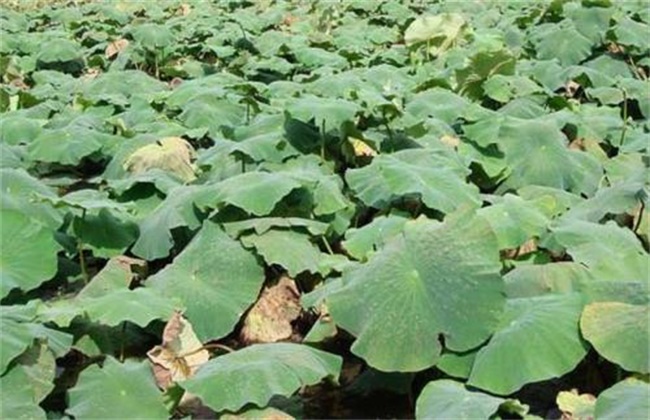
1. Disease Symptoms
This disease mainly damages the underground stem nodes, causing the lotus root to turn brown and rot, and the aboveground plants to turn brown and die. After the stem nodes are infected, the initial symptoms are not obvious. As the disease develops, the underground stem nodes gradually turn brown and the browning expands, spreading to newly formed underground stem nodes. In severe cases, the entire underground stem node turns brown and rots and becomes inedible. Because the underground stem nodes are harvested, the plant's vascular tissue is blocked, and the aboveground leaves gradually fade from green to yellow, with leaf margins turning brown, drying up or curling inward, eventually causing the top of the petiole to bend, turn brown and dry up. In severe cases, the lotus field turns uniformly yellow and withered, as if burned by fire. When digging up, thread-like mycelium and pink sticky matter can be seen on the lotus nodes.
2. Disease Occurrence Pattern
The pathogen overwinters as mycelium in seed lotus roots and soil. Infected seed lotus roots and soil are the main sources of infection. When infected seed lotus roots are planted, the seedlings become the central diseased plants after emergence, with lesions first occurring on the underground stem nodes and root system, gradually spreading to the petioles and leaves. The central diseased plants produce large numbers of spores, which spread through water flow and invade through wounds, causing secondary infection. Infected seed lotus roots are the main factor in the occurrence and epidemic of this disease in a given area. In addition, due to differences in resistance among varieties, deep-rooted varieties are less affected than shallow-rooted varieties. The disease is very easily triggered under conditions of continuous rain, insufficient light or frequent storms. Poor permeability in the lotus field, acidity, underground pest cultivation, application of undecomposed organic fertilizer, and excessive application of nitrogen fertilizer will all lead to severe disease.
3. Control Methods
Carry out crop rotation with other crops for more than two years. Before planting, deep plow and turn the soil, allow it to dry appropriately, and broadcast quicklime to disinfect and sterilize. When planting, choose varieties with strong disease resistance. Select disease-free seed lotus roots for sowing, and disinfect them with carbendazim solution before sowing. After planting, strengthen fertilizer and water management, apply decomposed organic fertilizer, and reasonably combine nitrogen, phosphorus and potassium fertilizers. Topdress timely and appropriately during the growth period to prevent excessive application of nitrogen fertilizer. Manage the water layer scientifically according to the needs of lotus at different growth stages, keeping the depth moderate, and use water to regulate temperature and fertilizer. When diseased plants are found, remove them promptly and apply chemicals to prevent spread. Available chemicals include carbendazim, shuangxiaoling, and dodine. Note that chemicals should be used alternately to avoid developing resistance.
The above is an introduction to the symptoms and control methods of lotus root rot disease. We hope it helps you. To learn more related knowledge, please follow us.