What kind of growing environment is suitable for Tetrastigma hemsleyanum?
Tetrastigma hemsleyanum is also called "golden thread hanging gourd", and the entire plant is used in traditional Chinese medicine, mainly the underground rhizome, which has the effects of clearing heat and detoxifying, and reducing inflammation and relieving pain, and is mainly used to treat bruises, tonsillitis and various other inflammatory conditions. It mainly grows in the mountainous areas of southern China, in mid-altitude regions, such as Yunnan, but it is also distributed in some areas with not very high altitude, such as Zhejiang. Only by studying the growing environment of wild species can better planting conditions be created for artificial cultivation; next, let us take a look at its growing environment.
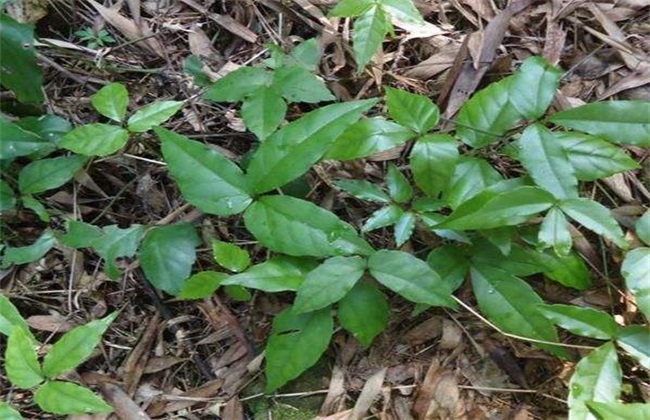
1. Soil
It likes fertilizer, and prefers fertile, loose soil rich in humus; loose soil is good for drainage, and fertile soil helps ensure sufficient nutrients, and it is best to have a place where fallen leaves accumulate year after year. For growth, the soil is required to be slightly alkaline, not acidic, and calcareous soil is best. The general soil pH is between 4.29 and 7.65.
2. Temperature
Areas with an annual average temperature between 16 and 22 degrees are suitable for planting; it can grow above 10 degrees, grows best around 25 degrees, can grow above 25 degrees and within 30 degrees, and then above 30 degrees growth will be affected, either growing slowly or stopping growth. The underground rhizome is more cold-tolerant than the aboveground plant.
3. Light
It is shade-tolerant, basically tolerant of partial shade, with a shade tolerance of about 40% to 50%; under this kind of shaded environment it grows well, and roughly weak light exposure is enough. If it is in direct sunlight, it can also grow, only poorly, but Tetrastigma hemsleyanum receives long-day light, and short-day conditions are not good for growth; it needs a relatively long period of sunlight to grow well, and grows excellently under scattered light.
4. Moisture
It likes a humid air environment, so it prefers a monsoon humid climate, and has strict requirements for moisture; it cannot have water accumulation, and moist soil that seeps out fine water can satisfy its growth. When moisture is required, the soil particles should remain intact rather than being compacted wet mud sticking together, which easily lacks air; the soil moisture content is about 55%.
5. Environment
It likes cool, shady understory spaces, and generally grows in valleys at an altitude of more than 1000, and will not grow on mountaintops. It likes to grow under trees or in shrub thickets, in shaded places. Because it is a trailing plant, it must have plants to climb on, and generally does not grow alone. The Yunnan-Guizhou Plateau and the middle and lower reaches of the Yangtze River in China are the main distribution areas, and it grows most abundantly in dense forest areas such as Myanmar and Vietnam.
First we learned about the wild environment of Tetrastigma hemsleyanum, and at the same time we also learned about its growing climate; the best thing is to be in the wild environment of Tetrastigma hemsleyanum. During artificial cultivation, the requirements of coolness, fertility, alkalinity, shade and suitable temperature should be met in order for it to grow well.