What are the control measures for the bean pod borer in common beans?
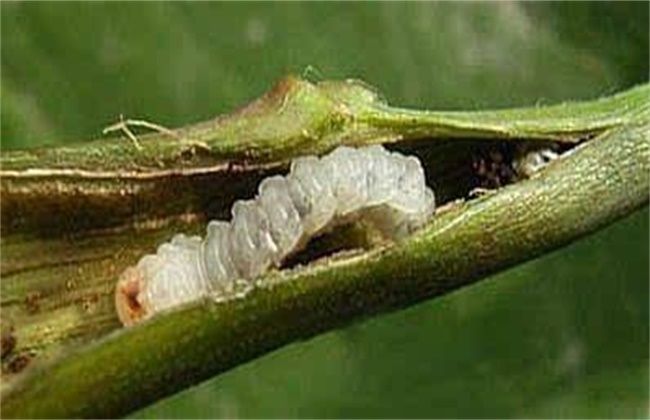
The common bean pod borer, also called the cowpea pod borer, is one of the most common pests during the growth of common beans. Because it reproduces quickly and spreads over a wide area, it is very difficult to kill completely. To help everyone better control this pest, below we bring you the control measures for the bean pod borer in common beans. Let's take a look.
1. Focus on agricultural control
Promptly remove fallen flowers and pods from the field, and pick off damaged curled leaves and pods, burying them deeply or burning them, and promptly destroy the larvae in the flower buds to reduce the pest source and prevent the pest from spreading further. In winter and spring, water more to increase soil moisture, so that the larvae that enter the soil to form cocoons die. In winter, plow the soil deeply so that the overwintering larvae in the soil are exposed, freeze to death, or are pecked by birds, thereby reducing the overwintering pest source.
2. Strengthen fertilizer and water management
In planting management, it is required that seedlings emerge uniformly, grow neatly, and that the flowering and podding period be relatively concentrated, so as to avoid concentrating the control of the pod borer in this period. Therefore, fertilizer and water management should be strengthened, flower and pod fertilizer should be applied sufficiently in one go, and flower buds that open early or late should be appropriately removed so that the maturity period is consistent, which is conducive to pest control.
3. Biological control
During the peak period of pod borer larvae, biological control methods can be used. You can spray a 500-fold solution of Qingchongjun or Shamimgjun or BT emulsion containing 10 billion live spores per gram, or spray a 300-fold solution of Beauveria bassiana containing 10 billion live spores per gram for control. Note that the bacterial solution should be used immediately after mixing. After mixing the Beauveria bassiana solution, it should be sprayed within 2 hours, once every week, for several consecutive sprays.
4. Chemical control
Chemical control adheres to the principle of "focusing on treating flower buds." During the flowering period, spray pesticide to kill the larvae in the flower buds. The spraying time is best set at 8-10 a.m. on sunny days, when the buds are opening, which helps the pesticide solution enter the flower buds and kill the larvae promptly. In addition, after the flowers fade, when the pods grow to more than 10 cm, spray 1-2 times, which can kill newly hatched larvae and young larvae that have bored into young pods. The chemical agents chosen should cause no pesticide damage to common bean flowers and young pods and have good permeability. You can choose fenvalerate, sumethrin, synergized fenpropathrin-malathion emulsifiable concentrate, kung fu, and other pesticides. Note that pesticides should be used alternately to avoid resistance. Spray once every 7 days, for 2-3 consecutive sprays. You can also, during the peak period of adults, mix dichlorvos with soil to make poisonous soil and spread it evenly on the ground to kill them.
The above is an introduction to the control measures for the bean pod borer in common beans. We hope it can help you. To learn more related knowledge, please follow us.