How to grow red chives? Understanding the key cultivation techniques in one article
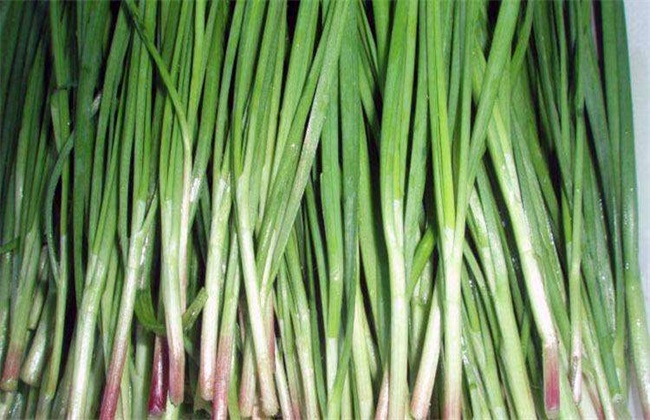
Chives are an ordinary vegetable, and the root and stem parts are generally white, but in Shouguang City, Shandong Province, there is a red-rooted chive. This chive is single-rooted and is a local specialty. It has the advantages of strong growth vigor, good yield, and strong resistance, so it is loved by people. However, as long as the environment is suitable, it can also be cultivated outside the local area. Next, let's talk about how to cultivate it.
1. Seed and site selection
Choose varieties with good cold resistance, strong adaptability, good disease resistance, strong growth vigor, and strong reproductive capacity for planting. The planting site requires an unpolluted environment, clean soil free of pests and diseases, and it is best to plant on a sunny hillside, with a clean water source nearby. The soil should be fertile and must not be poor, saline, or alkaline land.
2. Sowing and seedling raising
Directly make beds and open furrows for sowing in the field. The furrow depth is 3 cm; it does not need to be so precise, and digging the furrows roughly is enough. The row spacing is about 15 cm, and the soil cover is 2 cm. After covering with soil, water it, using sprinkler irrigation to water thoroughly, then water about once every two to three days to ensure the moisture needed for sprouting. For seedling raising, make a seedbed 1.2 m wide. After applying fertilizer and watering thoroughly, directly broadcast the seeds evenly and cover with about 1 cm of soil. Then keep it moist. After the seedlings emerge and grow 4 true leaves, they can be transplanted. Water before transplanting to avoid damaging the roots. The planting row spacing is 15 cm, and the plant spacing is 8 cm.
3. Field management
After direct sowing and emergence, promptly check the number of emerged seedlings and whether any have not emerged; those that have not emerged should be replanted in time. For seedling-raised plants, once the seedlings emerge uniformly, thin them out, removing weak seedlings, diseased seedlings, and poorly growing seedlings. After direct sowing and emergence, reduce water to prevent diseases. After seedling raising and transplanting, apply fertilizer and water to help seedlings recover as quickly as possible. Remove weeds promptly when found. After the seedling stage, apply additional fertilizer separately according to the growth stage.
4. Pest and disease control
The main disease is gray mold, which forms white-gray diseased spots on the leaves, and finally the spots spread, and after rotting, the plant dries up and dies. Use antibacterial fertilizer, and after the disease occurs, use 70% carbendazim or 70% thiophanate-methyl wettable powder for spray treatment, spraying 2 times with an interval of 3 days. The main pest is root maggots, which are also the larvae of the delayed-eye mushroom mosquito. They gather under the root system and gnaw on the root stems, ultimately causing root necrosis.
Red chives are a Shouguang specialty, but they can also be planted in other regions. Apart from the relatively high environmental requirements, the other cultivation methods are similar. During cultivation, the key point is to pay attention to pest and disease control. With this, the issues to note in the entire cultivation process are mostly covered.