What are the growing environment requirements for daylily?
Daylily is also called forget-sorrow grass; the reason it is called forget-sorrow grass is that ancient books say daylily tastes good and eating it makes you forget your worries. Daylily is a perennial plant in the Liliaceae family, and the main part harvested for eating is the flower, which resembles that of a lily. The flowers are generally yellow, hence the name daylily. So in what environment should such a fine daylily be planted, and what are its requirements for the growing environment? Please continue reading below.
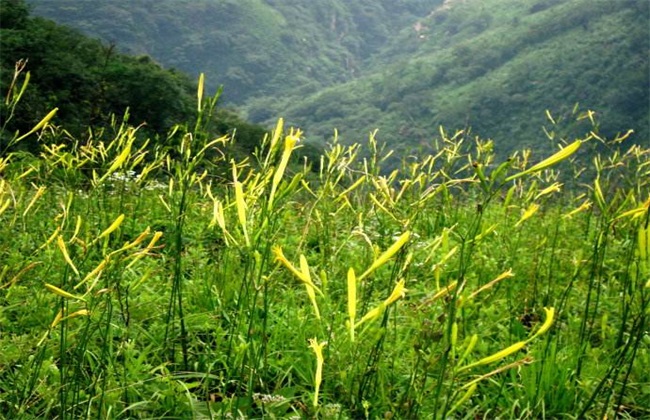
1. Temperature
The most suitable temperature for growth is 20 to 25 degrees, and the most suitable temperature for the leaves can drop to 15 to 20 degrees. During the flowering period, the temperature should be between 25 and 30 degrees; then, at low temperatures above 5 degrees, it can sprout, but it is best above 10 degrees, when sprouting and growth are fastest. The underground part is relatively tolerant of low temperatures and can survive at minus 10 degrees, lying dormant as perennial roots in winter and sprouting again in spring. Therefore, it grows best in temperate and subtropical regions.
2. Soil
It is not very strict about soil and commonly grows on hillsides or along riverbanks. It is generally fairly drought-tolerant, and can grow well even in dry soil; some wild stands on unmanaged mountain land can also grow, and sometimes it can grow where there is a bit of soil in rock crevices. It can also be planted where the soil is not very rich in nutrients; it has even been seen growing in dry yellow soil. Daylily can adapt to saline-alkali land and can also suppress salt in the soil.
3. Water
The soil is best kept at moderate dryness and moisture, with soil humidity around 50%; it is drought-tolerant, but do not let it get too dry. It is best to maintain a certain degree of moisture, as growth is better with water. However, do not let water accumulate, as waterlogging affects root growth, easily causes root rot, and suffocates and rots the rhizomes. Because the rhizomes have strong water retention, it is drought-tolerant.
4. Light
Its adaptability to light is broad, and it relatively prefers sunlight; with good light, photosynthesis is better, and the organic matter and nutrients produced are richer. Then, under moist conditions with good light, the yield is relatively good, but its adaptability to light is extremely strong, and it can also grow in somewhat shaded environments. It can be intercropped with other crops, or can also grow under some tree shade.
5. Climate
It is best to plant it in subtropical and temperate zones, and preferably in spring and autumn there; the lowest winter temperature there does not exceed minus 10 degrees, so it can overwinter and will not freeze to death. In spring, the temperature rises quickly, so it sprouts relatively fast and grows rapidly. In summer, it can also be shaded and cooled to grow.
Daylily is mainly suitable for planting in the southwest region and the central region; it can also be planted in the north, and can also be planted along the coast. Its adaptability is relatively strong. The growing environment can be regulated artificially, including temperature, which can also be regulated through certain measures.