What are the causes of eggplant fruit rot and the control methods?
As the eggplant planting area expands, eggplant fruit rot has become fairly common and has become a rather serious type of disease, especially when eggplant enters the late growth stage, when fruit diseases are more prominent, seriously affecting the quality and yield of eggplant. Now let's take a look together with the editor at the causes of eggplant fruit rot and the preventive measures.
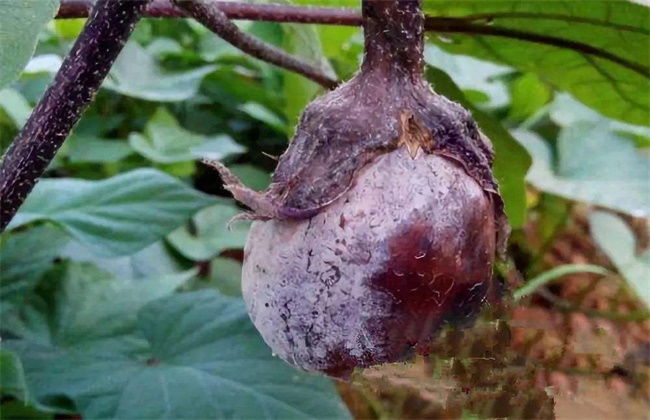
1. Eggplant fruit rot
It mainly harms the fruit. The pathogen invades through wounds on the fruit surface, causing the affected part of the diseased fruit to turn brown. The lesion gradually hardens and becomes sunken, turns into a black patch, and gradually develops a short fuzzy layer of black mold. The pathogen overwinters in the soil with diseased plant residues. Under suitable conditions, the spores spread through wind and rain, and the disease occurs very easily in a high-temperature, high-humidity environment.
Control methods: Choose varieties with high disease resistance. When the disease occurs, spraying chlorothalonil or sandofan gives a relatively good effect, but spraying chlorothalonil must be stopped one week before harvest, and the others must be stopped 3 days before harvest, so as to avoid drug residues.
2. Bacterial soft rot
After the disease occurs, the outer surface of the diseased fruit remains intact, but the inside of the fruit has already turned brown and rotted, accompanied by a foul odor. It gradually loses water and dries up, and finally falls off or forms a mummified fruit hanging on the branch. The pathogen overwinters in the soil with diseased plant residues, spreads through rain, irrigation water and insects, and invades through wounds. The suitable temperature is between 25-30 degrees, and the disease is more serious in a high-humidity environment.
Control methods: Strengthen field management, adopt high-ridge cultivation, control soil moisture, and control pests in time. Diseased fruits should be removed promptly and taken out of the field. When the disease occurs, spray agricultural streptomycin sulfate or DT fungicide for control.
3. Phytophthora blight
Phytophthora blight is the most serious disease occurring on eggplant fruit. It mainly affects fruit near the ground. Affected fruit develops water-soaked round spots that are slightly sunken, and the flesh turns black-brown and rots and easily falls off. When humidity is high, white cottony mycelium grows on the surface of the diseased part, and finally the fruit falls to the ground and rots.
Control methods: Phytophthora blight can be controlled with 50% dimethomorph 750-fold solution or Previcur 800-fold solution.
4. Anthracnose
Anthracnose mainly harms the fruit. When the disease occurs, nearly round or elliptical to irregular lesions appear, black-brown in color. Black dots form on the surface of the lesions and red sticky material overflows. The symptoms are obviously brownish to black, and in severe cases the diseased fruit rots.
Control methods: For anthracnose occurrence, 25% bromothalonil 500-fold or 25% prochloraz 1000-fold can be used for foliar spraying.
The above is an introduction to the causes of eggplant fruit rot and control methods. I hope it can help you. If you want to learn more related knowledge, please follow us.