What kind of growing environment does cirsium setosum have
The scientific name of cirsium setosum is little thistle, and it is a wild vegetable with a very good taste. It grows prostrate, and its growth height is about 30 cm. It is a perennial herbaceous plant. The stem is diamond-shaped, and the young stems are clustered with white fuzz. It grows everywhere except Tibet, Yunnan, and the Guangdong and Guangxi regions. So its adaptability is extremely strong. Now let us take a specific look at what kind of environment it grows in.
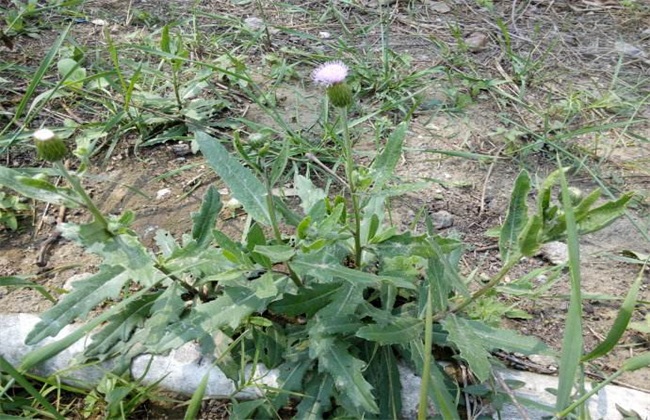
1. Environment
It grows in plains, valleys, hills, mountainous areas, field edges, roadsides, wasteland, and cultivated fields, and it is distributed in many countries, such as Japan, South Korea, Europe, Russia, and it even grows in Western Siberia.
2. Temperature
The most suitable temperature for growth is around 15 degrees, not too low, and not too high. The lowest temperature does not exceed 5 degrees, and the highest temperature does not exceed 30 degrees. Above 25 degrees, growth slows down. In warm regions, it can sprout and grow early. For example, in the Shanghai region, seedlings emerge in February, grow rapidly in March, bloom in May, and then the aboveground part dies, but by August it grows again. It can grow for two seasons a year.
3. Light
Cirsium setosum does not have strict light requirements. It mainly needs sufficient light during the flowering and fruiting period to promote flower bud differentiation, maintain growth, ensure seed production, and benefit reproduction. It is relatively shade-tolerant in growth and can also grow under weak light, but with sunlight it grows faster. However, do not expose it to direct strong light, as the temperature will rise and affect growth.
4. Humidity
Common cirsium setosum all grows in ordinary soil. Generally, the soil humidity is not very high, around 40% to 50%. During the flowering period, it needs a dry soil environment. At other times, the soil humidity should be much higher. After artificial cultivation, humidity can be maintained at 65%. Do not let water accumulate, and drain after rain.
5. Soil
Planting on sloping land is better, as water does not accumulate and the moisture level is not very high. Ordinary fields are also acceptable, but it is best not to plant it in fields arranged like paddy fields. This kind of field is surrounded by ditches for transporting water sources, and its position is also very low, so it is prone to flooding in summer. Slightly dry cornfields are very suitable for the growth of cirsium setosum.
Cirsium setosum is a delicious wild vegetable with dietary therapeutic effects. When cultivating cirsium setosum artificially, you must understand its wild environment, observe its growth habits more, and provide a better planting and growing environment based on these, so it can yield abundantly and with high yield.