What causes slow fruit enlargement in tomatoes, and how should it be prevented and treated?
Tomatoes are a common vegetable with a wide planting range. Many growers ask why their tomatoes enlarge slowly, or even fail to enlarge at all. What is going on here? Below, the editor will analyze this for everyone. Let's take a look.
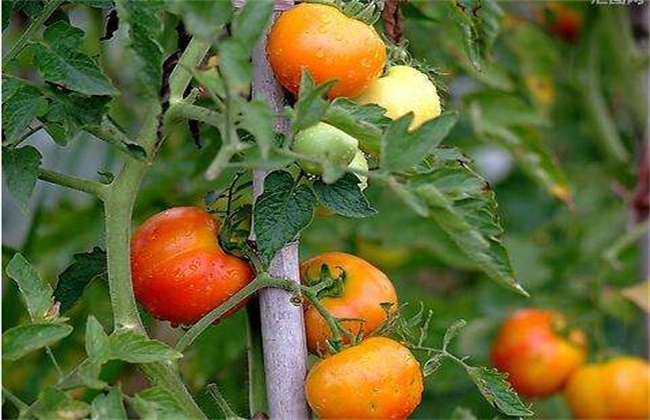
I. Causes of slow fruit enlargement in tomatoes
1. Varieties not suited to the environment
Some tomato varieties have poor adaptability to the environment and are not suitable for the local climate and cultivation conditions. Their ability to tolerate low temperatures in winter is not strong, and when they encounter continuous cloudy days or adverse low-temperature weather, the fruit does not easily enlarge.
2. Poor soil fertility
Many planting sites are sandy soil with poor water and fertilizer retention. Sufficient organic fertilizer should be applied to improve the soil, but many vegetable farmers clearly apply insufficient base fertilizer. Sometimes vegetable farmers apply only a three-element compound fertilizer, so the fertilizer utilization rate is low and the nutrient content is insufficient. Tomatoes naturally find it hard to get enough nutrients because they lack nutrients. In addition, sandy soil leaks water and fertilizer, and fertilization is unreasonable, which leads to slow tomato fruit enlargement.
3. Poor temperature and light
Creating suitable temperature and light conditions for vegetable growth is the key to ensuring normal growth and development. Many greenhouses have many drawbacks during renovation, which leads to poor insulation and low light transmittance, and cannot meet the needs of their growth, so fruit enlargement is slow.
4. Excessive application of nitrogen fertilizer
Excessive application of nitrogen fertilizer is a fertilization misunderstanding among many growers. Due to the antagonistic effect between fertilizers, excessive application of nitrogen fertilizer will lead to a deficiency of other nutrient elements, thus making fruit enlargement difficult. In addition, excessive use of nitrogen fertilizer can also affect the availability of other elements, especially potassium, boron, calcium and other elements. These elements are sometimes important substances for fruit enlargement, and once deficient, they affect fruit enlargement.
II. Prevention and treatment methods
1. Choose suitable variety seeds; choose high-yield varieties with strong stress resistance and suitability for local planting.
2. Scientifically manage fertilizer and water, mainly using organic fertilizer, apply sufficient base fertilizer, enhance the soil fertility level, and improve water and fertilizer retention capacity. At the same time, control the application of nitrogen fertilizer to avoid excessive vegetative growth of the plants. Increase the application of phosphorus and potassium fertilizers and trace elements such as boron and calcium to avoid stiff fruit caused by tomato nutrient deficiency. Improve the insulation performance of the greenhouse and the light transmittance of the greenhouse film, so that the temperature, humidity, light and other conditions in the greenhouse are suitable for normal tomato growth. Control the amount of watering, reasonably extend the watering time, reduce topdressing, and increase the day-night temperature difference.
The above is an introduction to the causes of slow fruit enlargement in tomatoes and prevention and treatment methods. We hope it can help you. If you want to learn more related knowledge, please follow us.