How to grow shepherd's purse? Detailed explanation of key cultivation techniques
The scientific name of shepherd's purse (jiji cai) is Capsella bursa-pastoris; it is a very popular wild vegetable. Artificial cultivation began in the early 20th century; previously people mainly gathered wild plants to eat. The history of artificial cultivation is not very long, so the cultivation techniques have not been widely promoted. Those who want to learn more can read this article to understand the cultivation techniques.
I. Planting time
It can be planted in all seasons except winter. In southern regions it is mainly cultivated in spring and autumn; spring planting is from the end of February to the end of April; summer planting is from July to August; autumn planting is from September to October. In North China, spring planting is in March, and autumn cultivation is from July to September. In winter, it is grown under protected facilities.
II. Land
For the planting site, as long as it is not low-lying, saline-alkali land, even poor land can be improved for planting. Deeper soil is somewhat better, and water and fertilizer retention are essential. In addition, it is best to use land that has never grown shepherd's purse before; do not practice continuous cropping, as continuous cropping leads to too many diseases. Plow the land, apply 2000 jin of farmyard manure per mu, mix it into the soil, till finely, level the land, and sun-dry the field.
III. Sowing
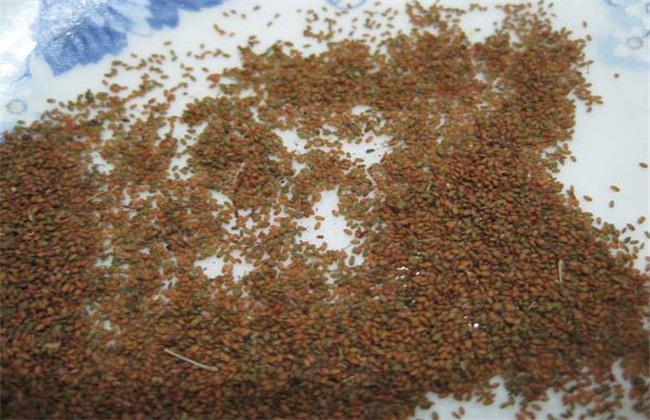
The seeds are very fine, so there is no need to soak the seeds to promote germination. Absolutely do not soak the seeds in hot water for disinfection, as it easily scalds the seeds. You can use low-temperature refrigerator treatment to break seed dormancy. Make a raised bed with deep furrows for sowing, with the bed surface about 1.5 m wide. Use a sieve to sift soil onto the bed surface as the planting soil. The seeds are tiny, so sow them evenly by broadcasting directly; they can be mixed with fine soil and broadcast, so that covering with soil is not necessary. Water to keep moist, and set up shade netting.
IV. Emergence
In spring they emerge in one week; in summer it is faster. During emergence, keep moist; do not let them dry out, but also do not let water accumulate. Field drainage ditches must be dug well, and two deep ditches like those around the field should also be dug in the field for drainage. In winter, water less; they will not grow leggy. When emergence is uniform, apply dilute fertilizer water; when true leaves grow, topdress with 600 jin of farmyard manure per mu. After emergence, promptly pull out weeds; once emergence is uniform, thin out diseased and weak seedlings; transplant when four true leaves have grown.
When growing shepherd's purse, special attention must be paid to the fact that the seeds are very fine; they cannot be soaked in hot water, and low temperature can only be used to break dormancy, prompting the seeds to sprout quickly and germinate rapidly after sowing. After emergence, key fertilization management must be carried out, followed by some detailed procedures.