Key Points and Management Methods of Winter Melon Cultivation Techniques
Winter melon is widely distributed in the tropical and subtropical regions of Asia. It is a vining cucurbit, and there are also wild species. It has anti-inflammatory and diuretic effects. It is a vegetable originating in China. Winter melon is now grown everywhere and is a common vegetable. Its cultivation history is extremely long, so there is a great deal of cultivation experience. Some specific cultivation techniques will be introduced in detail below.
1. Planting
Form ridges with a ridge width of 2 m. The ditch width is 30 cm and the ditch depth is 30 cm. High beds should be made for planting. Single-row planting can be used, with a plant spacing of 90 cm, and the ditches serve as the rows for row spacing. For autumn planting, the plant spacing is 70 cm. After planting, seedlings should be raised and transplanted, and then plastic mulch should be used to cover the planting. Raise seedlings in seedling trays; once the seedlings emerge and grow two true leaves, they can be transplanted. The planting depth is 4 cm, burying the root crown area. Before transplanting, spray a 50% carbendazim 500 solution for disinfection, then apply dilute fertilizer water to maintain the vigor of the seedlings.
2. Increasing the Fruit-Setting Rate
After winter melon sets fruit, generally only about 3 fruits are kept per plant, because the fruits are relatively large and absorb a lot of nutrients. If supply cannot keep up, fruit drop easily occurs, so it is better to select and keep fruits first. During flowering, artificial pollination can be done to ensure successful fertilization and fruit development. During the flowering period, physiological flower drop should be prevented, and spraying can be used. It is necessary to prevent pests and diseases from eating the flowers, which causes deformed fruits from incomplete development.
3. Fertilizing and Watering
After transplanting, fertilizer and water should be applied promptly, but do not apply highly concentrated fertilizer. It is best to help rapid growth. During the vigorous vine growth period, water more and apply nitrogen fertilizer. Apply 1 jin of urea and half a jin of potassium fertilizer per plant to ensure the vines reach the growth standard. Then topdress once before flowering. During the fruiting period, apply water and fertilizer multiple times, once every half month, applying 3 jin of compound fertilizer per plant each time, and water once a week. The water requirement is relatively high; water whenever the soil is dry. Apply small amounts multiple times.
4. Trellising and Tying Vines
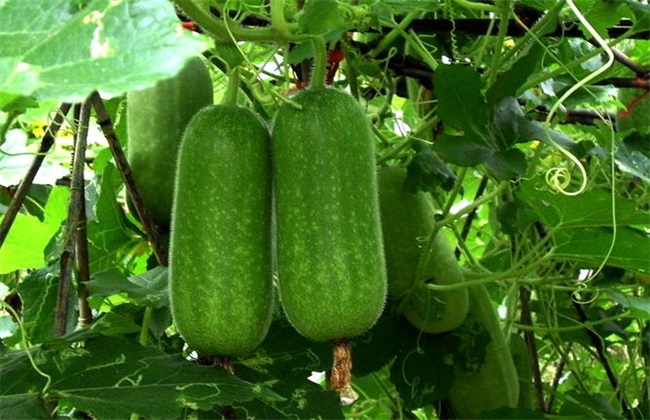
Winter melon vines are well developed and must be trellised. Without trellising, the winter melon vines can cover the entire garden, making movement impossible and management inconvenient. Therefore, trellising can be done once they grow to 20 cm. Cuttings can be inserted, or a trellis can be built. It is best to build a fence trellis, which receives good light and is convenient for management. You can also put hanging nets on the winter melons and hang them after the fruits set.
5. Suitable Harvest Time
More than one month after the flowers fade, they can be harvested. Specifically, observe the size, color, and whether the winter melon is mature. After maturity, stop fertilizing and watering. When harvesting, cut it off with scissors, which is beneficial for storage. Do not harvest too late, as it is not resistant to storage and rots easily.
Cultivating winter melon is actually about ensuring seedling emergence and survival. After planting, the main tasks are to promote flowering and increase the fruit-setting rate. In this way, by ensuring fertilizer and nutrients later, the goal of high yield can be achieved.