How to cultivate baby bok choy? Detailed explanation of planting methods and technical key points
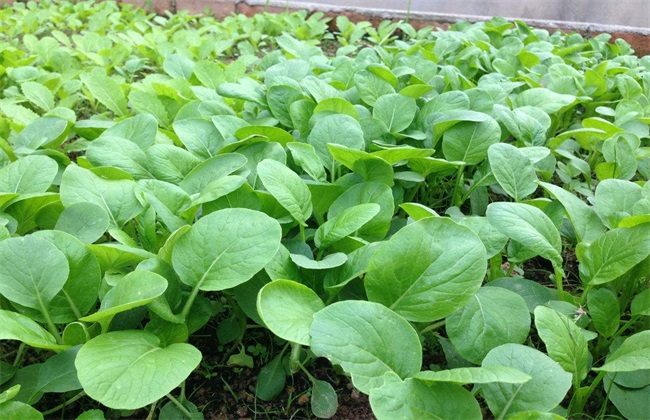
Baby bok choy is called different names in different places, some call it green vegetable, and some call it piao'er cai. It is a type of Chinese cabbage, widely cultivated, and except in winter it can be planted in the open field in other seasons. It tastes fairly good and is a vegetable people eat daily. Because of its long planting period, short planting time, fast maturity, and easy preparation, it is loved by people. The process of cultivating baby bok choy is not complicated, but if you want to grow it well there are certain finer points, so let us learn about them together now.
1. Planting time
Piao'er bai can be sown from August to November. It can be sown in spring. When temperatures rise somewhat in spring it can be sown; spring has a lot of overcast and rainy weather and is prone to damping-off disease. Direct sowing in summer grows faster, but there are many weeds and many insects, and it is prone to downy mildew. Sowing in autumn during the little Indian summer results in less disease and fewer pests and a short growing time. It can be planted in all of them. Winter temperatures are too low for difficult planting, so protected cultivation can be used.
2. Land preparation
Choose a plot of soil higher than a paddy field for planting. The soil is best neutral, or slightly alkaline soil. It must have good fertilizer retention and air permeability, and requires convenient drainage, but should not be too dry. The roots of Chinese cabbage are not deep, and it has a high water content requirement. Make raised beds in the land for planting. The raised bed is about 1.2 m wide, and the length is decided according to the terrain, but it is best not to exceed 5 m, as that is not good for drainage.
3. Sowing
For raising seedlings, you can directly broadcast sow on the raised bed, then after the seedlings emerge, thin them and weed. If there is a lot of watering, loosen the soil a bit. For seedling raising, transplant when they grow to 8 cm tall. Transplant at a plant spacing of 8 cm and row spacing of 10 cm. When planting in the field, it is fine if it looks suitable. When transplanting, lift the seedlings gently and damage the roots as little as possible. Water once with dilute fertilizer water in the first three days. For direct sowing, dig small holes in rows on the raised bed and sow, about 5 seeds per hole, with a plant spacing of 10 cm and a row spacing of about 15 cm. After sowing, cover with peanut shells to keep warm and retain moisture, and water frequently.
4. Management
Baby bok choy has shallow roots and a small distribution, so it does not absorb water easily, but it needs a lot of water, so water little by little but often. Similarly, because the roots are weak, it is very afraid of root damage, so it cannot have waterlogged conditions, and cannot be flood irrigated all at once. For fertilizing, you cannot apply chemical fertilizer dry all at once in too large an amount. Fertilizing mainly uses farmyard manure. Chemical fertilizer is used in small amounts. When applying chemical fertilizer, no need to cover with soil; finally apply it together with water. Because the growth period is short, for topdressing, about half a month after the seedlings become established, topdress once, with 30 jin of urea per mu at a time.
Cultivation includes the specific methods of planting and also the careful management during the growth period. In any case, as long as it is an operation process for the good growth of baby bok choy, it is all part of cultivation. Therefore, cultivation is a comprehensive type of planting management. The above content is hoped to help everyone.