What growing conditions does winter melon cultivation require?
Winter melon is a vining annual vegetable, mainly grown in tropical and subtropical regions, and it can be cultivated throughout our country, with wild varieties also found in the Yunnan region. Besides being used in cooking, it can also be made into candy, and the seeds have a medicinal effect of reducing swelling. So under its growing environment, what requirements does it have for the major factors that make up that environment, and what kind of environmental composition does it need? Let's go take a look together!
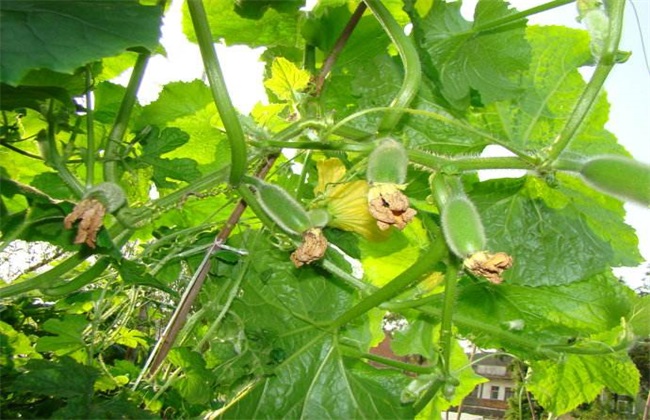
I. Sunlight
A short-day crop; under low-temperature and short-day conditions, flower bud differentiation is good, but in other periods it needs long days, and ample light is better for growth and development, so it can be said that its requirements for light are not very strict. During the fruiting period, light is needed for rapid growth and development; if there is little light, growth may be poor.
II. Temperature
Low temperatures during the fruiting period easily cause flower and fruit drop, or even fruit abortion. It relatively prefers warmth and tolerates heat; the best growing temperature is between 25 and 30 degrees, seed germination is best at 28 to 30 degrees, and root growth begins at temperatures above 12 degrees. The flowering period is best at 25 degrees. Below 20 degrees, the melon grows slowly and is affected. Planting must begin in spring, so that the fruiting period catches up with summer.
III. Nutrition
Winter melon fruits are relatively large and the growth cycle is relatively long, and bearing melons requires a large amount of nutrients, so fertilization is needed to supplement nutrients and improve soil nutrition. Generally, more farmyard manure is applied, and more nitrogen fertilizer should be applied; applying too much potassium fertilizer will make the melon's flesh harden. Only a moderate amount of phosphorus and potassium fertilizer needs to be applied. This is because the plant parts, the vines, need to be sturdy.
IV. Humidity
Winter melon has large leaves and many vines, and the fruit also needs a large amount of water, so throughout the entire growing period winter melon needs a large amount of water and cannot be drought-stressed. However, winter melon's root system is relatively strong, so when watering, it can be watered thoroughly in one go and then watered again after some time; it cannot be watered a little at a time many times, as absorption will not be in place. Watering must soak through the entire root area; do not leave some parts unwatered, as they will grow unevenly.
V. Soil
Sandy loam soil is preferred, as it is good for roots to penetrate downward. Winter melon's root system is distributed deeper than that of other vegetables, with relatively many fibrous roots, and loose soil is relatively more conducive to root growth. However, if conditions are insufficient, it can also grow in ordinary soil, as long as it is not in low-lying, compacted land, and continuous cropping should be minimized, and it should not be rotated with cucurbit crops.
Winter melon requires a relatively warm environment in terms of temperature, but it cannot be too high; it needs a relatively high water content, but air humidity should be somewhat lower. It needs many nutrients and needs timely supplementation. It is a short-day crop, but except during the flowering period it can grow well in a long-day environment. It is best to plant it in sandy loam soil.