What conditions are needed to grow Chinese onion (Allium chinense)? A detailed explanation of its growing environment requirements
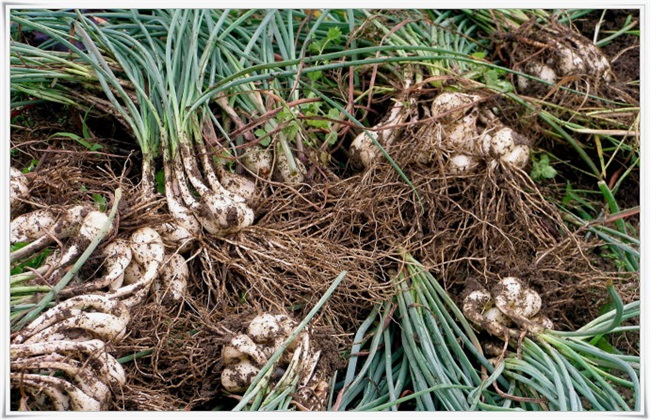
Chinese onion (Allium chinense) is a type of allium plant. Its rhizome skin is generally red or white. Besides being eaten fresh, it can also be pickled. It is currently mainly grown in the Yangtze River basin region. It is widely cultivated in southern China. It grows well in cool climates, but cannot grow in cold or hot climates. The specific requirements for its growing environment will be explained in detail below. This will help everyone understand the requirements of Chinese onion for its living environment.
I. Temperature
It grows at temperatures below 30 degrees and above 5 degrees. At 30 degrees it grows slowly, and above 30 degrees it stops growing. Then, below 10 degrees and above 5 degrees growth slows down, and below 5 degrees it goes dormant. Therefore, it is suitable for planting in spring and autumn in the subtropical regions of the south, when the temperature is more suitable. The optimum temperature for growth is 15 to 21 degrees.
II. Light
It grows well in short-day conditions and can adapt to weak light. Strong light easily causes water loss, raises temperature and causes scorching, so it is not suited to strong light. However, it can also grow under long-day conditions, and its light requirements are not strict. The warm sunlight and light duration of spring and autumn are the best light conditions.
III. Humidity
Chinese onion does not need too much water; it is enough to keep the above-ground stems and leaves upright and maintain a continuous supply of water to the underground rhizome. Therefore, soil moisture is generally kept at around 55%, and air humidity of 60% is very good. Generally, less watering is required before germination to avoid the seed rhizome rotting. After germination, watering should begin, once a day. When the seedlings grow to 10 cm, water once a month. During the rhizome swelling period, water once a week, and water less before harvest.
IV. Soil and nutrition
Fertile soil is required, preferably soil with high humus content. The soil is required to maintain a good structural layer, with good drainage and aeration, and it should be wind-sheltered and sun-facing sandy loam. Some humus soil can be applied before planting to improve the soil. Then, a large amount of base fertilizer should be applied throughout the planting period, 1000 jin of compost or manure per mu. Do not use poultry manure; poultry manure is very hot in nature and takes a long time to decompose. Farmyard manure can meet the demand for major elements as well as the demand for various trace elements. In addition, during topdressing, various trace element fertilizers should be sprayed. There are also different amounts of compound fertilizer at each stage.
For these environmental factors necessary for plant growth, Chinese onion has its own unique requirements. For example, it likes fertilizer, so it may need a sufficient supply when supplementing nutrients during growth. In short, by making appropriate adjustments to these environmental components according to its growth needs, you can provide the good growing environment that Chinese onion needs.