What kind of environment is suitable for plantain to grow in?
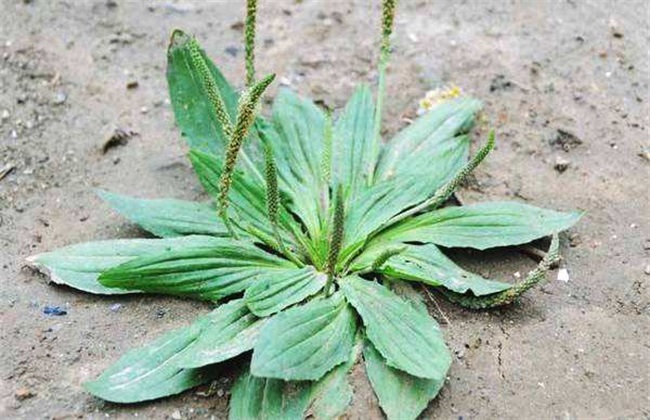
The scientific name of plantain is Plantago depressa, commonly known in rural areas as toad grass. It is a wild medicinal herb. Because it has long grown in the wild, it is highly adaptable, but it still has some requirements for its growing environment. In rural areas, it can usually be found growing mainly on field ridges, or in ditches and roadsides, but always in relatively moist places. It seems to have no strict requirements for soil, and no fertilizer is applied to supplement nutrients. However, if it is cultivated artificially, and you want to obtain some economic benefits, you cannot just let it grow freely. You must provide a suitable growing environment. Next, let us look at what requirements plantain has for its environment.
1. Planting land
It can be planted in places where forage grass is grown, and some riverbanks can be developed and utilized. Riverbanks are close to water sources, so growth is better there. Generally, the planting field does not need to be too high; former rice fields, vegetable plots and the like can all be used for planting. Moist, fertile soil is best, and ideally soil that faces the sun and has good water- and fertilizer-retention capacity.
2. Growing moisture
Although plantain is drought-tolerant, it very much likes a moist environment, and it grows well under such conditions. Therefore, it is best to dig ditches around the outer edge of the planting field. Growing rice nearby can help maintain soil moisture and air humidity. The best soil moisture is when you grab a handful of soil, squeeze it tightly into a ball, and a little water appears at the gaps between your fingers, while the ball does not fall apart when released. Air humidity can be somewhat lower than soil humidity. For irrigation, continuous drip irrigation and infiltration are best.
3. Development temperature
It can grow normally at temperatures between 20°C and 24°C. Above 30°C, growth is slow; above 32°C, growth stops; and sustained high temperatures may cause it to lose water and die. It likes a warm climate, but does not adapt to high temperatures. It can grow normally above 15°C, but according to my observations in subtropical regions, it can overwinter in winter. When rapeseed flowers bloom, children often go to pull up plantain to make shuttlecocks.
4. Light requirements
Its growth does not have very strict requirements for light. It is relatively light-loving, but also very shade-tolerant. Plantain is commonly seen growing in rapeseed fields, where there is actually some shading. However, when there is sufficient light, you will find that it grows very quickly, with thicker leaves and thicker leaf veins, while with little light, the leaves are softer and thinner.
When planting plantain, you can see that generally you first need to choose suitable land and soil, and then you need to consider whether the area is suitable for its growth and development. In addition, wild grasses do not need overly meticulous management, so as not to lose their original adaptability and resistance. Meeting the environmental conditions it needs is what matters most.