How to Grow Panax notoginseng for High Yield? Detailed Explanation of Key Cultivation Techniques
Panax notoginseng is a well-known and important traditional Chinese medicinal herb. It is mainly the underground rhizome that is harvested for medicinal use. At present, the main producing area is Wenshan, Yunnan. Panax notoginseng is mainly used to treat diseases such as coughing up blood and blood in the stool. It belongs to the Araliaceae family, genus Panax, so it is a precious medicinal herb with excellent efficacy. There has been a certain period of artificial cultivation now, but to cultivate Panax notoginseng, you must achieve a high yield in order to obtain higher economic benefits. Let us learn together about the specific high-yield cultivation techniques.
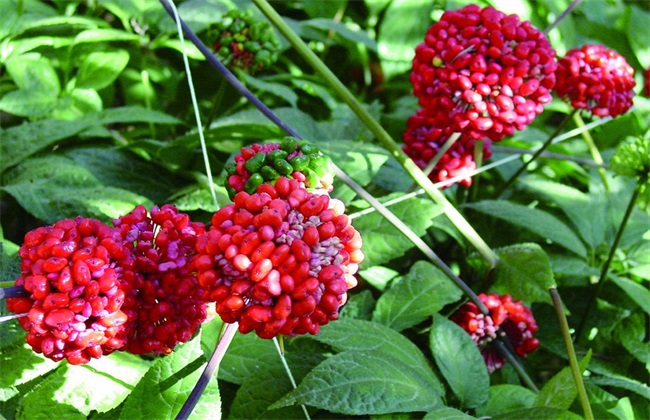
1. Site Selection and Land Preparation
It is best to choose gently sloping land with a slope of about 10 degrees for planting. Gently sloping land drains relatively smoothly and will not accumulate water. The soil is best if it is humus-rich soil with plenty of fallen leaves. It is best if solanaceous and fruiting vegetables have not been planted there before, and land where soybeans have been grown is best. Before plowing the soil, grass can be spread over the entire field and the field burned to disinfect and kill bacteria and insects. When plowing, apply 2000 jin of organic fertilizer per mu. Plow the land, level the soil, and make beds, preferably 1.2 m wide, with the length determined according to the terrain.
2. Seeds and Seed Disinfection
Each year during the seed-setting period, select robust mother plants to pick seeds. After screening, keep the fullest, best-colored, and intact seeds for storage. Seeds easily lose viability when dried, so it is best to store the seeds by stratification indoors in a clean, shaded room. Before sowing, stir and soak the seeds in 50-degree hot water for 20 minutes, then soak them in seaweed liquid for more than 10 minutes, drain them, and then sow.
3. Sowing and Raising Seedlings
Direct sowing in rows: sow evenly in the furrows, cover with soil mixed with organic fertilizer, and then cover with rice straw to maintain soil moisture. You can also water and then cover with gray plastic film, which has good heat preservation and moisture retention. Water every day before emergence. It is best to raise seedlings in a greenhouse, and then temperature and humidity can be regulated when raising seedlings in a greenhouse. After emergence, water less. After the seedlings are uniform, thin them once, remove weak and diseased seedlings, and water before transplanting. Plant spacing 15 cm, row spacing 20 cm.
4. Field Management
Weeds must be removed as soon as they are found, as they must not compete for nutrients. The roots of Panax notoginseng are shallow, and roots are easily exposed after rain, so soil should be hilled up to cover them in time when found. Strong light is not conducive to growth, so a shade shed must be built for planting, but too little light will also cause disease and poor growth. Therefore, the final light transmittance should be about 50%. Fertilization should be applied in small amounts many times, mainly potassium fertilizer and phosphorus fertilizer. During the seedling stage, plant ash can be broadcast twice, and during the expansion stage, apply 30 jin of calcium fertilizer. When flower buds are produced, they can be pinched off to reduce consumption. The main diseases and pests to control are damping-off disease, phytophthora disease, and mites.
5. Harvesting and Processing
For Panax notoginseng to meet the standard for sale, it must be harvested and processed, dried well, and then sold. When harvesting, clean off the attached soil, then trim the fibrous roots, dry in the sun, rub, and then dry thoroughly in the sun or directly dry by machine. Place it in rice husks and bury it for a period of time, and once the surface is glossy, it is ready.
To achieve high yield in Panax notoginseng cultivation, in fact, it is necessary to do better in the details of the planting process, then manage more meticulously and thoroughly, provide the most suitable environmental conditions for growth and development, ensure sufficient nutrition, maintain good growth vigor, and then seize the key period of management during the flowering and expansion stage.