Detailed Guide to Cherry Tomato Cultivation Techniques: Master the Key Points of Cultivation and Management
The cherry tomato is a new variety bred from the cherry tomato, and many people often confuse it with the cherry tomato, but there are actually differences between them. So how should cherry tomatoes be grown? Let's learn about it together.
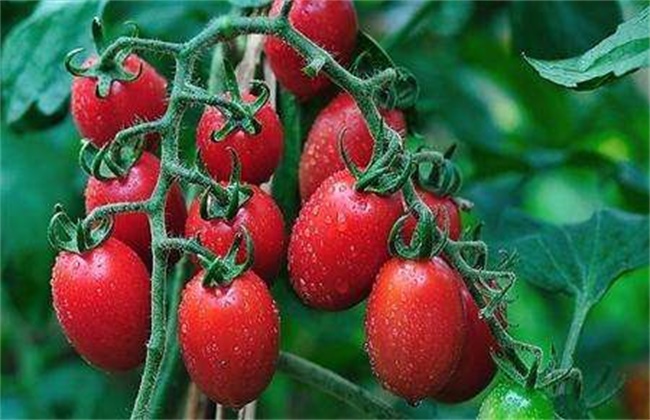
1. Sowing and Raising Seedlings
You can choose an arched shed or a solar greenhouse for raising seedlings. The best time for raising seedlings is mid to late August. Soilless plug tray seedling raising can also be used, usually with peat, vermiculite, perlite, furnace slag, etc. as the seedling substrate. Before sowing, soak the seeds in warm water at 50-60°C for 10 minutes while stirring continuously, then soak them in warm water at about 30°C for about 5 hours, then disinfect them with a chlorothalonil solution for 10-15 minutes. After removing them, wash them clean with water and let them dry slightly, then germinate them at 25-30°C. When the seeds show white sprouts, they can be sown. For plug tray seedling raising, sow one seed per cell, cover with a 0.5 cm layer of vermiculite, water, and then cover with plastic film to retain moisture. When seedlings emerge, remove the plastic film in time, manage water properly, keep the temperature between 18-30°C, ventilate appropriately, and prepare for transplanting when the seedlings grow 5-6 true leaves.
2. Land Preparation and Fertilization
The cherry tomato is an indeterminate cherry tomato. To ensure high yield and high quality throughout the year, it is advisable to apply 3000 kg of high-quality decomposed farmyard manure, 50 kg of nitrogen-phosphorus-potassium compound fertilizer, and 1 kg of borax per mu during land preparation. After leveling and harrowing, form ridges, generally with a large row spacing of 90 cm, a small row spacing of 70 cm, and a ridge height of 15-20 cm. You can also dig a deep furrow after forming ridges, apply the base fertilizer into the furrow, backfill soil evenly, and then form ridges for transplanting.
3. Transplanting
Transplanting is best done on a cloudy day or in the afternoon on a sunny day. When the seedlings grow to 5-6 true leaves and the plant height is 15-20 cm, they can be transplanted. For double-stem pruning, with a plant spacing of 40-40 cm, transplant 2000-2200 plants per mu; for single-stem pruning, with a plant spacing of about 30 cm, transplant about 2500 plants per mu. When transplanting, do not bury the soil too deep, as this may cause stem rot, then water to help the seedlings recover.
4. Field Management
After transplanting, keep the temperature between 18-28°C. In winter, pay attention to heat preservation, and it must not be lower than 12°C to avoid freezing damage to the plants. 5-7 days after transplanting, combine watering with one intertillage and loosening of the soil, and pay attention to the amount of watering. When the fruit expands, topdress in time, then water once every 20 days, and try not to water without fertilizer. During the flowering and fruit-setting stage, in order to increase yield, promote flower bud differentiation, and concentrate harvesting, you can appropriately spray foliar fertilizer 2-3 times. For year-round fruiting, pruning is necessary. With double-stem pruning, keep one main vine and one side vine and hang both vines, while removing all other side branches; with single-stem pruning, keep one main vine and remove all other side branches. At the same time, remove old leaves and diseased leaves in time to reduce pests and diseases and increase air permeability.
The above is an introduction to cherry tomato cultivation techniques. I hope it can help you. If you want to learn more related knowledge, please follow us.