Detailed Explanation of Key Points of Off-Season Cultivation Techniques for Water Bamboo
Water bamboo (Zizania latifolia) is a perennial rhizomatous plant that grows in swamps and wet muddy fields. It is mainly grown for its underground swollen stem. Generally, water bamboo cultivation includes single-season water bamboo and double-season water bamboo. Double-season cultivars have higher yields. Conventional cultivation brings it to market in May, but off-season cultivation can be planted in winter and harvested as early as February of the following year, allowing growers to seize an early market opportunity and strive for better economic returns. The specific off-season cultivation techniques are described in detail below.
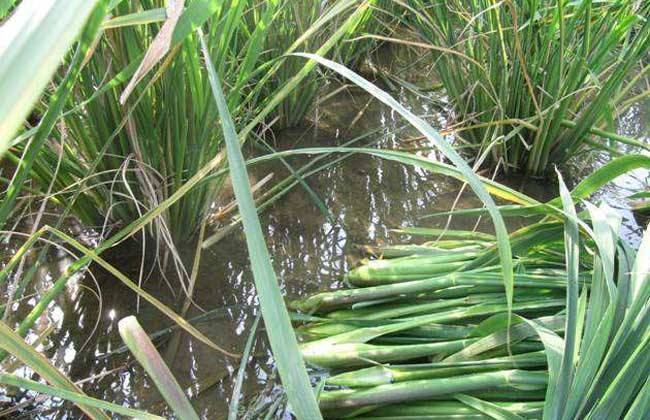
1. Seed and Site Selection
Choose low-lying fields for planting, but the soil must remain fertile. Some weeds or rice straw can be turned and trampled into the field so that after decomposition they become soil nutrients. The site should have convenient drainage and irrigation. Fertilization is about 3000 jin of farmyard manure, combined with 100 jin of nitrogen fertilizer. Build a seedling bed in the paddy field, similar to rice seedling raising, level the bed surface, and make a bed surface 1.2 m wide. Then select previously harvested seed water bamboo. Generally, seed water bamboo should have strong tillering ability, be thick and sturdy, and be intact. First dry it in the sun to promote sprouting; once the outer leaves dry out, seedlings can be raised.
2. Seedling Management
For seedling raising and planting, both row spacing and plant spacing are 5 cm. The seedling stubs should be covered with rice straw. The rice straw must be disinfected and used after spraying with a pesticide. After the straw sprayed with pesticide dries, it can be set on fire to burn off the outer old leaves and at the same time reduce sources of pathogens. Then plastic film can be used to cover and keep warm for seedling raising. Because the outside temperature is relatively low, the film should be removed after one month, when the outside temperature has risen somewhat. After emergence, maintain a water layer of 2 cm and broadcast a little plant ash.
3. Fertilization
Apply nitrogen fertilizer during the tillering stage. Generally, apply about 30 jin of urea, 50 jin of superphosphate, and then 35 jin of potassium chloride per mu. This is a budgeted fertilizer amount; fertilization should be adjusted flexibly during the process. Fertilization during the tillering stage should be applied in small amounts multiple times, which can prevent excessive vegetative growth and promote rapid swelling of the rhizomes. To promote rhizome swelling, apply one more topdressing: 30 jin of urea and 10 jin of potassium chloride.
4. Water Layer Control
Because growth requires a large amount of water, after planting the water layer must be controlled according to the growth stage. During the tillering stage, keep only 3 to 5 cm of shallow water to prevent excessive vegetative growth. When tillering has grown to about 8 plants per seedling, water can be added to more than 10 cm. When water bamboo is tillering, the water should not exceed the heart leaf.
5. Other Management
Within two weeks after transplanting, carry out one intertillage. Intertillage is to control tillering, and there should not be too many tillers. When growth shifts to water bamboo formation, some old leaves can be cut off to improve ventilation and light penetration. When field humidity is high, pay attention to the occurrence of pests and diseases. The main ones are rice stem borer and greater rice stem borer. Generally, use 0.1% matrine emulsifiable concentrate at 1000 times dilution or 0.6% miechongling at 1500-2000 times dilution for continuous spraying control. For frequently occurring sheath blight, use 5% Tianan aqueous solution at 400 times dilution or 50% anilazine wettable powder at 400 times dilution for spraying.
The main point of off-season water bamboo cultivation is to regulate the temperature to normal planting temperature. This ensures successful seedling raising and smooth emergence, allowing the planting time to be advanced. In addition, planting must pay attention to pest and disease damage. Other basic cultivation processes are not very different from normal planting.