What to Do About Eggplant Premature Senescence? Cause Analysis and Solutions
Eggplants grow vigorously during the growing season and bear a large amount of fruit, but in the later stages of growth they are highly prone to premature senescence, which adversely affects yield and quality. So what should you do when eggplants show premature senescence? Don't worry, let's take a look together with the editor at the solutions for eggplant premature senescence.
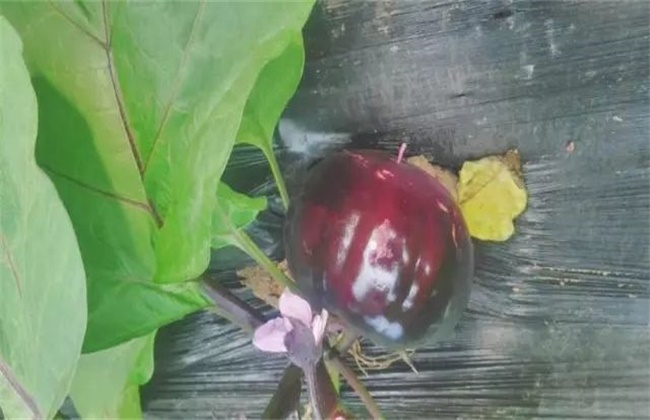
1. Symptoms of Premature Senescence
In the middle and late stages of growth, the root system begins to age, and its ability to absorb nutrients weakens. The growing point becomes increasingly stunted, and the surrounding leaves grow taller than the growing point. The overall vigor of the seedlings becomes weaker and weaker, and the leaves become more and more yellow, losing their luster. In the later stage, the eggplants basically cannot set fruit, the color is dull, the fruit swelling rate slows down, and the eggplant fruit may even stop expanding.
2. Causes of Premature Senescence
There are many causes of eggplant premature senescence, but on the whole they are caused by temperature and fertilizer/water management. During seedling raising, when the temperature is high and humidity is high, and no shading or cooling measures are taken, the stems and leaves of the seedlings grow excessively, which can easily lead to poor root development and loss of absorption capacity in the later stage. Applying large amounts of chemical fertilizer during the seedling stage, especially nitrogen fertilizer, will also aggravate excessive vegetative growth, stimulate stem and leaf growth, and result in poor root development and weak absorption capacity. Applying large amounts of chemical fertilizer after transplanting will also inhibit the depth and breadth of root growth, resulting in underdeveloped roots and affecting absorption function. During intertillage and weeding, the plowing depth is relatively shallow, and combined with the application of large amounts of fertilizer, the soil structure is destroyed, causing severe soil compaction and a very shallow plow pan, which also affects root development and prevents the absorption of enough nutrients to support aboveground growth.
3. Solutions
In the middle and late stages of eggplant growth, when the root absorption capacity is weak, nutrients can be supplemented through foliar fertilizer to enhance the plant's stress resistance and alleviate the problem of the growing point not growing. In addition, fertilizer and water management should be strengthened, and plain water should be applied to relieve the root system. On the other hand, rooting should be stimulated, which can be done with boron and zinc fertilizers, once every 7-10 days, for 2 consecutive times.
The above is an introduction to the causes of eggplant premature senescence and solutions. We hope it can help you. If you want to learn more related knowledge, please stay tuned to us.