What causes soil salinization in greenhouses? A full analysis of prevention and control measures
Soil salinization in greenhouses is a common phenomenon in vegetable greenhouse cultivation, and it often leads to uneven seedling emergence, reduced yield and quality in summer, directly affecting growers' income. So what causes soil salinization in greenhouses? What should be done? Let's take a look together.
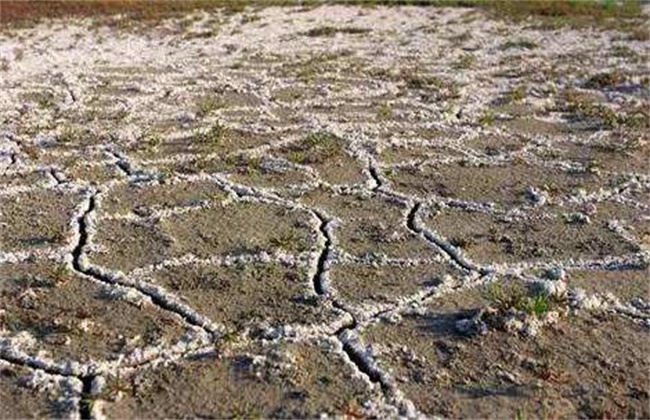
I. Causes of soil salinization
1. The greenhouse environment is relatively closed, land utilization is high, and fertilizer application is large. With no rainwater leaching for a long time, fertilizers cannot dissolve into the soil and remain in the tillage layer. In addition, the temperature inside the greenhouse is too high, water evaporation is large, and salts from deep in the soil rise to the surface layer.
2. During greenhouse cultivation, watering is too frequent, which destroys the soil structure and causes compaction. The soil permeability is poor, salts cannot penetrate into the soil layer in time, and after water evaporates, salts accumulate, causing salinization.
3. Excessive application of chemical fertilizers increases the salt content of the soil. In particular, excessive application of fertilizers such as ammonium nitrate more easily causes soil salinization and compaction in greenhouses, reducing soil permeability.
4. When many growers apply human and livestock manure, because the temperature inside the greenhouse is high, the human and livestock manure rapidly volatilizes and decomposes, a large amount of ammonia is volatilized away, and some salt substances remain in the tillage layer, causing soil compaction and salinization.
II. Prevention and control measures
1. Improve the soil
To improve soil permeability, lower the groundwater level, and increase the organic matter content in the soil, deep plowing can be adopted: turn the salt-rich topsoil down to the lower layer and turn the relatively less salty lower layer soil up to the upper layer, which can greatly reduce salt damage. At the same time, combine this with land preparation to improve soil structure, enhance permeability, and raise soil temperature.
2. Increase the application of organic fertilizer
Applying organic fertilizer rich in cellulose greatly enhances soil fertility. It not only favors the extension of vegetable roots and strengthens the absorption capacity of vegetable roots, but also greatly increases the organic matter content of the soil.
3. Apply base fertilizer deeply
When using chemical fertilizer as base fertilizer, it should be applied deeply. For topdressing, try to follow the principle of small amounts applied multiple times. It is best to mix pollen and organic fertilizer and apply them together, then plow. When topdressing, the amount of fertilizer should be strictly controlled, and it is not suitable to topdress too much at one time, which would increase the soil solution concentration.
4. Promote foliar fertilization
Plant growth mainly relies on roots to absorb nutrients, but leaves and tender stems can also directly absorb nutrients from sprayed solutions. Foliar fertilization can be promoted to protect the soil. Urea, potassium dihydrogen phosphate, and some trace elements can all be used as foliar topdressing.
The above is an introduction to the causes of soil salinization in greenhouses and prevention and control measures. We hope it can help you. To learn more related knowledge, please follow us.