What are the precautions for growing celery in summer?
Celery is a side vegetable that many people really enjoy eating, and many people like to add a little celery when stir-frying to enhance the flavor. Therefore, the market demand for celery is relatively high now, and the planting area is also continuously expanding. So as summer gradually arrives, there are many things we need to pay attention to when growing celery in summer. Today, the editor brings you the precautions for growing celery in summer. Let's take a look!
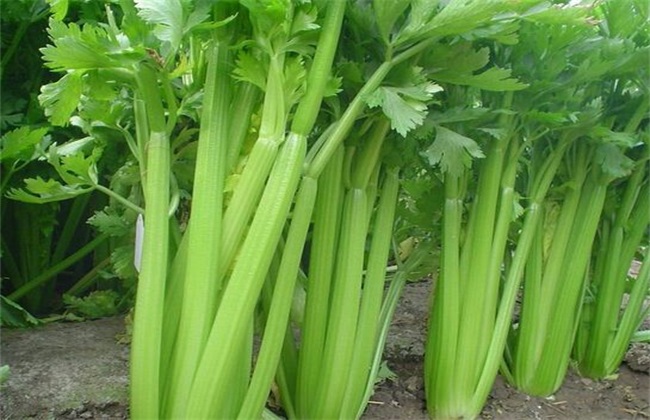
1. Sowing and seedling raising
The temperature in summer is very high, and celery seeds germinate very difficultly under high-temperature conditions, so we must pay attention to doing a good job of seed pre-sprouting. When pre-sprouting the seeds, the temperature should be controlled at around 18 degrees, and it must not be too high, otherwise the pre-sprouting will not have much effect. After sowing, pay attention to shading, water appropriately, keep the soil moist, and promote seedling emergence. However, the water should not be too much, and drainage work should be done well during the rainy season. Then when the seedlings grow two leaves, thin them out. When the seedling age reaches about two months and the seedlings are about 18 cm, they can be called strong seedlings.
2. Planting density
The planting density of summer celery must be strictly controlled. Only by ensuring the robust growth of each seedling and coordinating the growth relationship between the overall celery crop and individual seedlings can the yield be effectively increased. The planting spacing between plants and rows should be controlled at about 7*10 cm. During the first seedling hardening of celery, control the amount of watering well, generally watering once about every week, and just keep the soil alternating between dry and wet. Then during the second seedling hardening, pay attention to also controlling the temperature well. Improve the ventilation inside the shed, with the daytime temperature controlled at around 19 degrees and the nighttime temperature controlled at around 14 degrees.
3. Temperature control
As just mentioned, the high-temperature environment of summer is actually very unfavorable for the growth of celery. Celery has strong cold tolerance, but its heat tolerance is very poor. When planting in summer, the daytime temperature should be kept at around 20, and the day-night temperature difference should be controlled at around 7-8 degrees. If the temperature is too high, it will have a fatal impact on celery. Therefore, when planting, we must improve the ventilation inside the shed, ventilate and aerate appropriately, and maintain convection. Ventilation can effectively lower the temperature inside the shed.
4. Adjusting light
Light is also very important for the growth of celery. Under low-temperature and long-day conditions, celery is very prone to bolting due to the photoperiod. So we must do a good job of adjusting light. When planting in summer, if it is greenhouse cultivation, then the shed film should be covered to avoid direct sunlight. If it is open-field cultivation, then after planting, a shade net must be set up well to avoid direct sunlight while also providing celery with an appropriate amount of scattered light. Then pay attention to doing a good job of cleaning the shed film, and also ensure a certain degree of light transmittance.
The above is a brief introduction to the precautions for growing celery in summer. There are many things we need to pay attention to when growing celery in summer. In addition to the above, there are also pests and diseases, humidity, fertilizers, and so on, all of which cannot be ignored. That is all for today's introduction. This article is for reference only, and I hope it can be helpful to everyone.