What should be noted when fertilizing eggplants in summer?
In summer, temperatures are high, eggplants grow vigorously and yields are high, so they have a relatively large demand for fertilizer. At this time, harvesting and fertilizing go on simultaneously, which is the key to obtaining high yields. When fertilizing eggplants in summer, several points require special attention. Let's take a look together below.
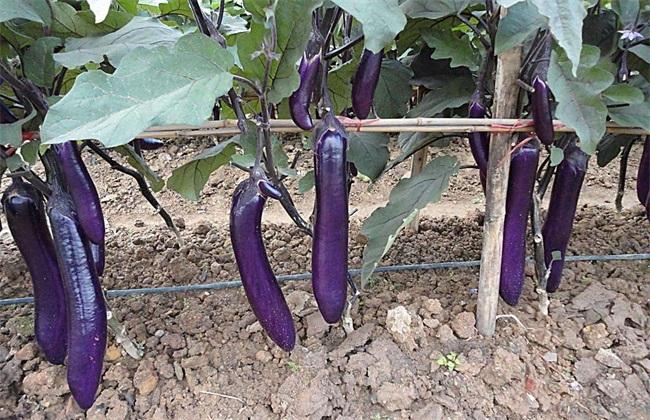
1. Avoid applying too much nitrogen fertilizer alone
In summer, eggplants grow robustly. At this time, vegetative growth and reproductive growth advance side by side, and both plant growth and fruit development need sufficient nutrients, so the demand for nutrients is relatively high. When fertilizing at this time, it is not advisable to apply nitrogen fertilizer alone. Nitrogen fertilizer itself has the effect of promoting plant growth. If nitrogen fertilizer is applied alone, the vegetative growth of the plant will exceed the reproductive growth, causing excessive vegetative growth of stems and leaves. Because the fruit cannot absorb enough nutrients, its development is affected, and small fruits, weak fruits and deformed fruits appear, seriously affecting yield and quality and causing huge economic losses to farmers. Therefore, phosphorus and potassium fertilizers should be reasonably combined, and phosphorus and potassium fertilizers should be applied 2-3 times during the full fruit stage. It is best to use a ternary compound fertilizer so as to meet the growth and fruit development needs of eggplants, thereby improving yield and quality.
2. Avoid applying fertilizer by flushing it with water
Many farmers habitually apply fertilizer by flushing it with water. This method cannot be called wrong; during the seedling stage of crops, this fertilization method is very good. However, in summer, when it is hot with high temperatures, nitrogen fertilizers, especially ammonium carbonate, decompose and volatilize very easily. The ammonia gas produced by decomposition not only reduces fertilizer efficiency but also very easily causes ammonia poisoning in plants. Therefore, when applying fertilizers such as urea and ammonium carbonate, the method of furrow application or hole application must be adopted. At the same time, fertilizer should be reasonably applied deeply according to soil conditions, so as to prevent fertilizer from remaining in the plow layer and easily causing soil salinization.
3. A single fertilization should not be too large
Eggplants have a very large demand for fertilizer during the full fruit stage, but under high-temperature conditions, the method of applying small amounts more frequently should be adopted. Be sure not to apply too large an amount at one time, so as to avoid excessive vegetative growth of the plants, which is unfavorable to yield and quality. Generally, topdressing is done once every seven days, using 10-15 kg of urea per mu each time.
The above is an introduction to the points to note when fertilizing eggplants in summer. I hope it can help you. If you want to learn more related knowledge, please keep following us.