How to Propagate Perilla? A Detailed Guide to Common Propagation Methods
Perilla is a culinary vegetable that can also be used medicinally, and it has a long history of cultivation. If you want to propagate it, the main method is seed sowing. Seed sowing is divided into two approaches: direct sowing and raising seedlings for transplanting. Direct sowing is generally suitable for places with a tight growing schedule or a good growing environment. Usually, to achieve fast and uniform emergence with fewer diseases, the seeds are soaked and pre-germinated before being raised as seedlings for transplanting, which makes management easier. The following content introduces the specific seedling-raising methods, so let's take a look.
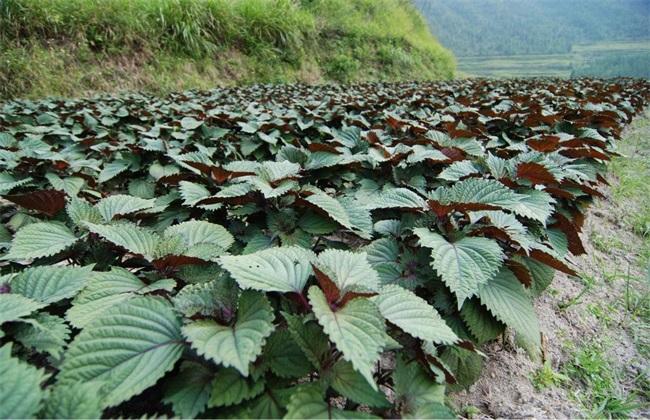
1. Site Selection and Land Preparation
Before sowing, choose a piece of land that is slightly elevated, does not accumulate water, faces the sun, and is sheltered from the wind. The soil should be loose, deep, breathable, and able to retain fertilizer, with a good structural layer, so it can hold enough water and also let it drain through, rather than always waterlogging after watering. First, turn the soil over and do a rough ploughing, then a fine ploughing, then apply 800 jin of farmyard manure per mu and rotary till it in together. Build separate seedling beds, level the land, and then form ridges across the main field, 30 cm wide and 10 cm deep.
2. Direct Sowing
Sow in spring, after the temperature rises; generally sow in March in the south and April in the north. Make beds directly, 1.5 m wide and 5 m long, and sow directly in the beds by digging holes in rows, sowing two to three seeds per hole, with a plant spacing of 20 cm and a row spacing of 30 cm. You can also open furrows 3 cm deep and scatter the seeds evenly, then cover with about 1 cm of soil. After sowing, spray water without washing away the seeds, and keep it moist the whole time. Direct sowing is relatively labor-saving, and the growing cycle is somewhat shorter.
3. Raising Seedlings
Raising seedlings is mainly done in arid areas or environments with insufficient water, as this ensures emergence; direct sowing in dry land makes emergence difficult. Make a seedling bed inside a greenhouse, which helps with heat and moisture retention. The greenhouse should face the direction with good light. The seedling bed should be given farmyard manure, and after sowing and watering, scatter plant ash. Sow evenly directly, cover with 2 cm of fine sand mixed with humus soil, water to keep moist, and scatter plant ash. After emergence, thin the seedlings and weed, and transplant when four true leaves have grown.
4. Transplanting
Transplant on cloudy days, drizzly days, or when there is no sun. Water one day before transplanting, so the seedlings come out smoothly with less root damage. Pull out a few seedlings at a time for transplanting, not too many at once, or the seedlings left over will lose water. For transplanting, use a plant spacing of 30 cm, open furrows 15 cm deep and 20 cm wide, plant in holes 4 cm deep, press the soil down, and water with dilute fertilizer water once every three days; after three times, restrain the seedlings and stop applying fertilizer water.
The specific content of perilla propagation methods is as above, divided into direct sowing and raising seedlings for transplanting. Both require land preparation before sowing, and there are some detailed points in between for raising seedlings and transplanting. This is for everyone's reference, and I hope it is helpful. Thank you for reading and supporting.