What causes tomato leaves to turn yellow?
Tomatoes are a vegetable grown on a relatively large area in our country. No matter what you grow, you often run into many problems during the growing process. Tomatoes are certainly no exception; for example, when growing tomatoes, problems such as leaf curling, cold damage and yellow leaves often appear. So today I bring you the causes of yellow leaves on tomatoes and the methods to prevent and control them. Let's take a look together below!
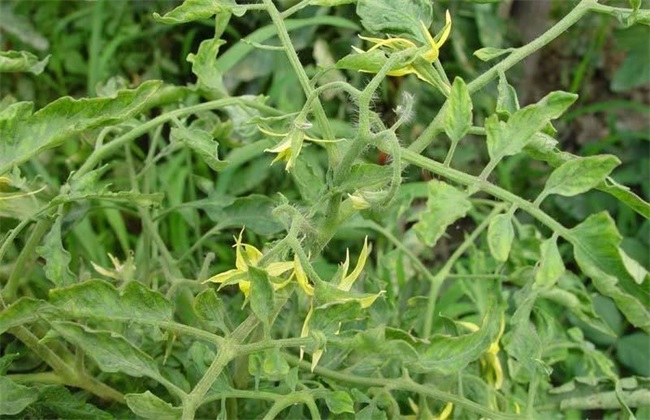
1. Causes of yellow leaves
Soil salinization
Tomatoes cannot be grown in continuous cropping. Through years of soil use, substances such as nitrogen, phosphorus and potassium in the soil become fixed. This forms large amounts of salts that tomatoes cannot absorb, leading to soil salinization. When tomatoes are grown continuously for more than three years, the probability of soil salinization reaches more than 30%. This causes poor nutrition for tomato growth and the appearance of yellow leaves.
Nutrient deficiency
Tomato growth has a relatively large and comprehensive demand for nutrients. If nutrients such as nitrogen, potassium and magnesium are lacking, the leaves in the middle and lower parts of the plant will gradually turn yellow; if iron and zinc are lacking, the upper leaves will turn yellow. Moreover, excessive application of chemical fertilizers will worsen the yellowing. The root cause of nutrient deficiency lies in the soil and the plant's roots; poor soil quality or poor root development will both affect the plant's nutrient absorption and cause yellow leaves.
Root diseases
Root diseases are also a main cause of yellowing in tomatoes, such as root rot and Fusarium wilt. A mild outbreak will affect root development, leading to poor nutrient absorption and naturally causing yellow leaves. If the outbreak is severe, it will not only cause yellow leaves but also kill the plants. In addition, overwatering, which leads to soil compaction, or improper use of chemicals, will also cause yellow leaves on tomatoes.
2. Prevention and control methods
Soil salinization
Before planting, deep-plow the soil and irrigate heavily once to leach the salt substances down to the bottom of the soil. Then increase the proportion of farmyard manure applied to raise the organic matter content in the soil, promote the adsorption of salt substances and protect root growth. Then appropriately apply microbial bacterial fertilizer as a drench so that microorganisms can decompose the salt substances.
Nutrient deficiency
First, we need to reduce the amount of chemical fertilizer applied and increase the proportion of organic fertilizer. Carry out scientific fertilization according to the tomato's growth stage; for example, during the full fruiting period of tomatoes, appropriately carry out foliar topdressing, supplementary application of nitrogen, potassium and magnesium fertilizers, and reasonably supplement the corresponding nutrient elements according to the soil fertility situation. You can also use substances such as seaweed fertilizer for root drenching to promote rooting and strengthen the tomato plants. Finally, do a good job in preventing and controlling root diseases and insect pests, reduce the incidence of diseases and insect pests, protect the roots, and control the amount of watering well; do not overwater, drain promptly when water accumulates, and use chemicals reasonably.
The above is a brief introduction to what causes yellow leaves on tomatoes. There are very many causes of yellow leaves on tomatoes; when growing tomatoes, we should be careful not to use continuous cropping and solve the problem from the root. That is all for today's introduction. This article is for reference only, and I hope it can help everyone!