Detailed Explanation of Key Points of High-Yield Pruning Techniques for Schisandra chinensis
Schisandra chinensis is a traditional Chinese medicinal herb with a relatively long history in China, and it is grown on a very large area in the country. The annual consumption of Schisandra chinensis is now quite large, so more and more people are growing it, and the demands on yield are naturally getting higher and higher. When growing Schisandra chinensis, if you want to increase the yield, then pruning is indispensable. So how should Schisandra chinensis be pruned? Let's take a look together below!
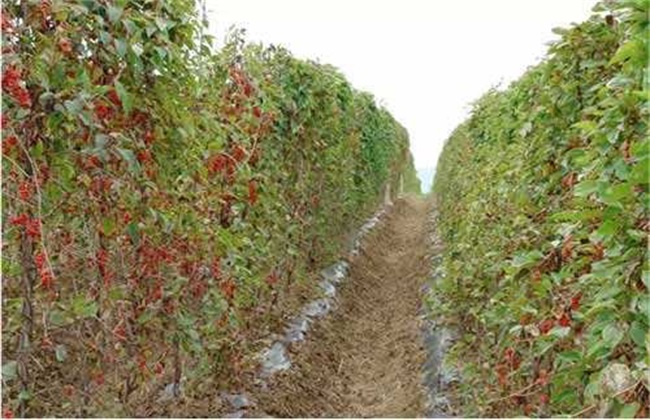
1. Trunk determination
Schisandra chinensis seedlings grow relatively vigorously in the summer of the same year after planting, so for each plant we should take care to retain about 3 lateral vines for the work of training the vines onto the poles. Use two bamboo poles per seedling, and retain about two main vines per bamboo pole. When all the main vines have grown to about 50 cm, carry out tip pinching and trunk determination. This promotes the growth of short fruit branches. When the young branches have grown to about 30 cm, then choose one that is growing vigorously as the extension branch. Other secondary shoots are tip-pinched at about 20 cm to increase the number of flowers and fruits.
2. Renewal pruning
Schisandra chinensis is a monoecious crop, so the annual flowering rate of female flowers directly affects the yield. Therefore, when growing it, we should prune appropriately to improve the air and light penetration of the trellis surface, enhance the photosynthesis of the leaves, and increase the number of female flowers. In early spring, when the sap begins to flow, retain about 30 cm of the previous year's extension main vine, cut away the excess, and cut the secondary shoots back to about 20 cm. When the new secondary shoots emerging at the cut grow to about 20 cm, then choose one secondary shoot and do not tip-pinch it, treating it as a delayed branch, to promote robust growth of the main vine and improve the quality and quantity of flower buds on the secondary shoots.
3. Cyclic renewal
When Schisandra chinensis has a heavy fruit load, also in early spring when the sap is flowing, take care to cut all short fruit branches back to about 12 cm. Then during the flowering and fruiting period, at the junction between the base and the main vine, encourage new short fruit branches to emerge. Then choose an excellent, robust position as the fruiting branch for the next year. Remove excess branches, and when pruning the next year, take care to promptly cut away the old fruiting branches. Use new fruiting branches, and carry out cyclic renewal of the fruiting branches every year, so that the yield can be effectively increased.
4. Pruning methods
Schisandra chinensis should be pruned appropriately in every season. When pruning in spring, mainly cut away short fruit branches and old dead branches. Retain about 10 buds on long fruit branches, then thin them appropriately to avoid interfering with each other's growth. Then carry out summer pruning in June to July, with the targets being inner-canopy branches, overly dense branches, and so on; even when new branches grow too densely, take care to thin them promptly. Then in autumn retain about 3 robust branches and cut away excess basal branches, generally after leaf fall. Finally, carry out winter pruning before winter sets in, to help Schisandra chinensis overwinter successfully.
The above is a brief introduction to the pruning techniques for Schisandra chinensis. The pruning work for Schisandra chinensis is directly related to the yield, so everyone must pay close attention when growing it. That is all for today's introduction. This article is for reference only. Thank you all for reading and supporting.