What are the control measures for flower drop during the flowering period of hyacinth beans?
The hyacinth bean is flat in shape, looking much like a crescent moon, which is why it is called the hyacinth bean. It is not only attractive in appearance but also excellent in taste and high in nutritional value. It is grown in many regions, but many farmers have found that hyacinth beans are highly prone to flower drop during the flowering period, which seriously affects the number of pods the plant sets. So how can hyacinth bean flower drop be reduced? Let's take a look.
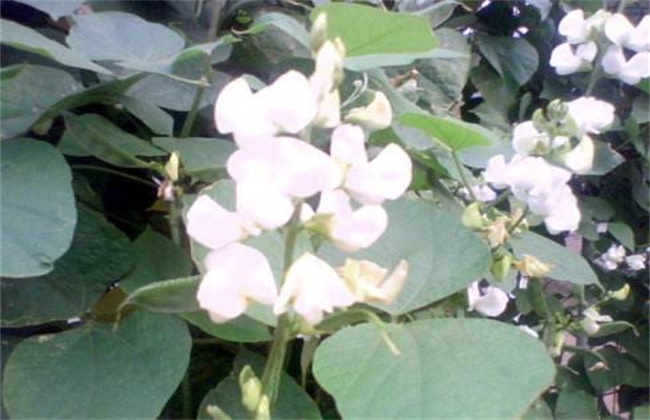
1. Temperature regulation
The flowering period of hyacinth beans is extremely fragile, so the temperature must be kept stable. If the temperature is too high or too low, it will have a huge impact on the flowers. If the low temperature falls below 15 degrees, the flowers will suffer cold damage, their ability to absorb nutrients will decline, and their growth will be greatly restricted, resulting in flower drop. If the temperature is above 28 degrees, the flowers will lose a large amount of water, gradually wither, and fall off before long. Therefore, during the flowering period of hyacinth beans, the temperature must be well regulated so that the plants grow at a suitable temperature and produce more flowers.
2. Bagging
The flowers of hyacinth beans are not particularly firmly attached, and they will be damaged when affected by strong winds during the flowering period. At this time, the absorption capacity of the damaged flowers will decline severely, and some damaged parts of the spent flowers will even rot. After rotting, the flowers will fall off and cannot set pods. Moreover, after rotting, they will leave behind a large amount of pathogens, causing even greater harm to the plant. Therefore, before strong winds arrive, bags can be used to cover the hyacinth bean flowers to protect them from damage, and after the strong winds pass, the bags can be removed so that the flowers can set pods normally.
3. Strengthen fertilizer and water management
Hyacinth beans bloom one after another, and after each part blooms, nutrients must be supplemented in time. There is no excessively high requirement for nutrients; simply scattering an appropriate amount of urea at flowering time is enough, and the plant will grow very well after absorbing it. As the flowers and pods grow, the plant's nutrient consumption increases, and there may be a situation where the plant's supply is insufficient, leading to the appearance of some old leaves and yellow leaves. These leaves have low photosynthetic efficiency and cannot synthesize and transport nutrients very well, so the number of flowers and pods will be severely reduced. Watering during the flowering period of hyacinth beans is also quite particular. At the beginning of flowering, the flowers are growing using their own nutrients, so it is best not to water. After the pods have set, watering can be done appropriately to let the plant produce more flowers.
The above is an introduction to the control measures for flower drop during the flowering period of hyacinth beans. We hope it can help you. To learn more related knowledge, please stay tuned to us.