Detailed Explanation of Field Management Techniques for A-choy
A-choy is a variety of lettuce, a vegetable cultivar developed in recent years, and its cultivation management differs from that of lettuce. A-choy is grown mainly for its leaves, so its fertilizer and water requirements are different. The growth characteristics of a-choy determine the management content. Weather and environment determine the focus of pest and disease control. The specific management tasks are as follows, please read on.
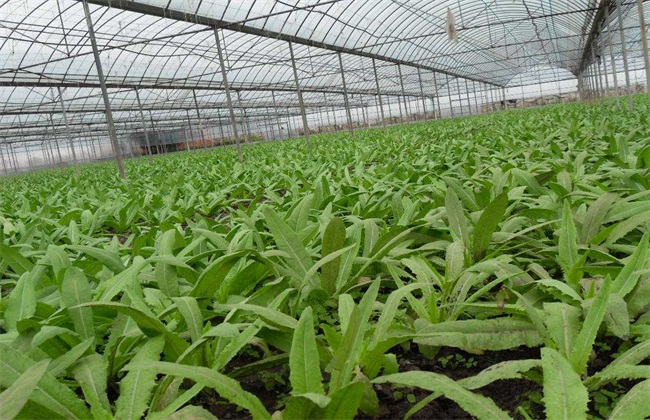
1. Transplanting
Transplant when 5 to 6 true leaves have grown. Before transplanting, flood-irrigate to soak the soil thoroughly, then lift the seedlings when the soil is moist and loose. Do not water until it turns to mud, or the seedlings cannot be transplanted with soil attached. Try to damage the roots as little as possible. For seedling raising, seedlings can be lifted fairly easily without watering, so that the potting mix does not crumble. Transplant with adequate spacing, not crowded. Roughly 20 cm between rows and 10 cm between plants. Adjust as needed. After transplanting, it takes about 10 days to recover. Do not apply fertilizer or water during this period.
2. Fertilizing
For field base fertilizer, apply about 1200 jin of barnyard manure. You can add about 200 jin of plant ash. Applying it in furrows between rows gives a higher absorption and conversion rate; broadcasting it over the whole field does not concentrate the fertilizer, but it is very good for improving the soil. For topdressing, mainly apply more nitrogen fertilizer. When the plants reach 15 cm in height, spray a 1:300 monopotassium phosphate solution to supplement nutrients. You can also dissolve 10-15 kg of urea in water and apply it through irrigation.
3. Drainage and Irrigation
About 10 days after transplanting, once the seedlings have recovered and the roots and other parts are growing normally, water once to help them establish. If soil moisture is good, watering can be delayed. A-choy needs sufficient water to maintain leaf growth, but guard against downy mildew caused by excessive humidity, or waterlogging damage to the basal leaves. Maintaining about 60% soil moisture is sufficient.
4. Pests and Diseases
Downy mildew occurs frequently, mainly infecting stems and leaves, or the leaves near the base. It mainly produces water-soaked lesions that expand into large rotting areas and develop white mold. Before the disease appears, spray 200-fold high-fat film (emulsion) once every 10 days. In the early stage of the disease, spray 75% chlorothalonil wettable powder at 500-fold dilution. If the disease is severe, use 58% metalaxyl · mancozeb wettable powder at 500-fold dilution. The main insect pest is aphids, which suck the leaves. When they occur in large numbers, use 50% pirimicarb wettable powder or 50% fenitrothion emulsion at 1000-fold dilution for control.
5. Cultivation and Weeding
Once weeds are found after planting, use herbicide promptly, but preferably a plant-based herbicide. When weeds are few, remove them by hand and use as little herbicide as possible. Leafy vegetables are prone to herbicide damage. Cultivation can be done after rain to prevent soil compaction.
That is all about the specific management content. If you have your own management experience, you can refer to it and combine it with these practices. Hope this helps everyone, thank you for your support.