What are the precautions for planting Shanghai bok choy?
Shanghai bok choy, also known as Shanghai cabbage, Suzhou bok choy, or qingjiang cai, is a small bok choy variety grown in East China. It has few leaves and many stalks, and its stalks resemble a gourd ladle, which is why it is also called piaor bai. It has high nutritional value, can provide the minerals and vitamins the human body needs, and can help supplement blood vessel elasticity. So what precautions are there for planting Shanghai bok choy? Let's take a look together.
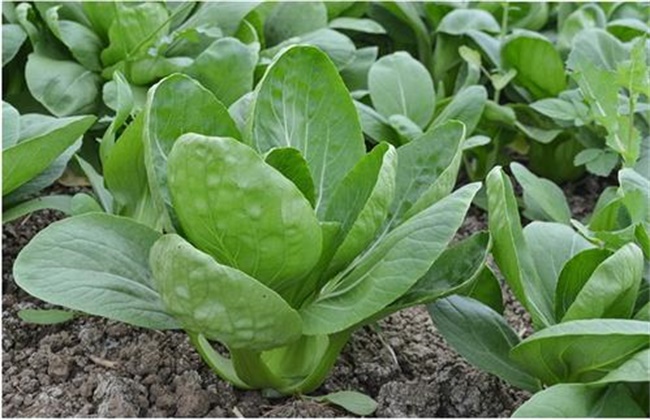
1. Site selection and fertilization
When planting, it is recommended to choose a plot with loose, fertile soil that is sunny and ventilated, preferably loam or sandy soil, with good drainage and sufficient light. After selecting the site, deep plowing should be carried out before planting, the soil should be raked fine, and then base fertilizer should be applied to ensure that Shanghai bok choy has sufficient nutrients for growth. For the base fertilizer, it is recommended to use farmyard manure or organic fertilizer, but when using it, be careful to fully decompose it to avoid burning the roots.
2. Fertilizer and water management
After Shanghai bok choy emerges, the soil needs to be kept moist. When the temperature is high, water once in the morning and once in the evening. It has a relatively high water demand during the growing period and is not cold-tolerant, so be careful to water more, but also be careful not to cause waterlogging in the soil. After rain, drainage measures should be taken to avoid root rot or disease caused by standing water. Its growing period is relatively short. To achieve higher yields, fertilization is indispensable. Fertilization should mainly be nitrogen fertilizer. In the early stage, the concentration should be small, and in the later stage it can be appropriately increased. Generally, organic fertilizer is sprayed once a week, and fertilization is stopped 2 weeks before harvest.
3. Pest and disease control
In summer, there are many pests and diseases due to high temperatures, so be careful to promptly remove old leaves and diseased leaves. When there are pests, they should be eliminated in time. Appropriate supplementation of phosphate and potassium fertilizer can also help improve the plant's disease resistance. Reasonable crop rotation can reduce the harm of pests and diseases. For example, in spring and summer, plant melons and solanaceous crops, beans, and root vegetables, then plant small bok choy, and afterward plant choy sum or cabbage. It can also be intercropped with scallions, garlic, spinach, and others.
4. Timely harvest
The harvest time of Shanghai bok choy must be well controlled. The best harvest period is when Shanghai bok choy has 10 to 15 true leaves. Harvesting too early or too late will affect the quality and yield of Shanghai bok choy.
The above is an introduction to the precautions for planting Shanghai bok choy. We hope it can help you. If you want to learn more related knowledge, please stay tuned to us.