Field Management Methods and Technical Points for Water Shield
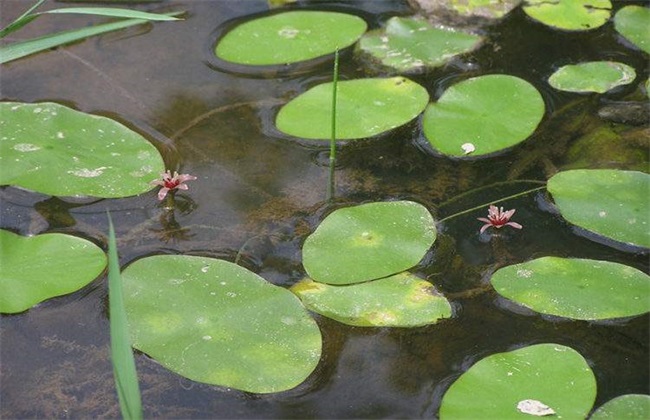
Water shield, also called lake vegetable, grows in aquatic environments. Water shield has no flavor but a tender, smooth texture, contains various minerals, vitamins and other nutrients, and also has medicinal value, making it a precious vegetable. Because water shield lives in water, its later management differs from that of other vegetables. However, the main management aspects are largely the same, only the specific requirements differ. So now let's look at how to manage it specifically and what management techniques there are.
I. Fertilizer and Water Management
To improve the soil, pond mud or humus soil can be used to amend it, and per mu apply another 30 jin of urea, mixed with river sand and 100 jin of decomposed straw. After this, generally no topdressing is needed; if topdressing is really necessary, just scatter a few dozen jin of nitrogen fertilizer. It must be planted in water, and cannot lack moisture, and it is best to maintain a 30 cm water layer, gradually deepening it later, but it must not exceed one meter and must not be less than 10 cm, so that it can grow well; drought and water loss will cause it to wither and die. Shallow water in spring, deep water in summer.
II. Temperature and Humidity
Water shield likes warmth and cannot tolerate cold; below 15 degrees it will grow poorly, and then it grows best within the range of 20 to 30 degrees. Above 354 degrees growth will be somewhat slower. It requires air humidity of around 80%. It must not be lower than 70%, which is bad for leaf growth. It requires cool air, with water temperature above 14.
III. Light
It likes light; when light is sufficient, it benefits leaf growth, can accumulate nutrients and accelerate reproduction, but high temperatures in midsummer will slow growth a little. Overall it needs relatively strong light, and can also tolerate shade; it can grow in shaded environments too, only it does not grow as well as under light.
IV. Pest and Disease Control
The main pest is the root-eating golden flower beetle, which mainly gnaws leaves and petals; use 90% crystalline trichlorfon at 800 times dilution for spraying, or 60% imidacloprid 500 solution for spraying control. There are also harmful aquatic animals such as snails and slugs; use dipterex mixed with soybean cake to poison them. It is highly toxic but causes no phytotoxicity. Or use niclosamide, 100 grams per mu is effective. The main disease is leaf rot; first, change the water frequently to keep water quality clean and free of pathogens, and do not use farmyard manure when fertilizing, as it easily carries pathogens. After pruning diseased branches, spread lime to disinfect.
Water shield is mainly grown in aquatic environments, so water management is very important; you must maintain the right amount of water at the right time, and then temperature and light must also meet the requirements for water shield growth. Then during the growth process, just pay attention to preventing pests and diseases. The above content is provided for understanding and reference; thank you for reading and supporting.