How to choose and use cotton foliar fertilizer? Key points explained clearly in one article
For cotton farmers, spraying foliar fertilizer is extremely important, but many farmers do not know which foliar fertilizer to choose, and they are also not very clear about what to pay attention to when using foliar fertilizer. Let's learn the relevant knowledge together below.
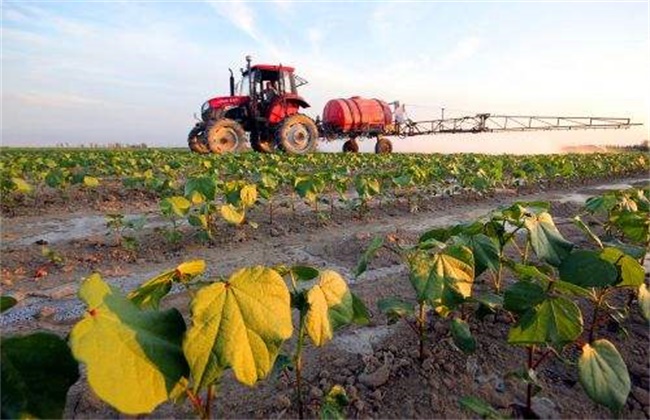
I. Selection of foliar fertilizer
1. Seedling stage
When sufficient base fertilizer has been applied, strong seedlings can be left without foliar fertilizer. If seedlings grow too vigorously, some plant growth regulator —— mepiquat chloride can be sprayed as appropriate to inhibit their growth, while weak seedlings can be sprayed multiple times with nitrogen, phosphorus and potassium elements to promote weak seedlings to become strong.
2. Growth stage
When cotton enters the period when vegetative growth and reproductive growth proceed together, strong seedlings, under the condition of sufficient base fertilizer, can be appropriately sprayed with plant growth regulators and also with micro-fertilizers. For example, boron deficiency can cause bud and boll shedding, so boron fertilizer can be sprayed 2-3 times at the squaring stage. When plant growth regulators are sprayed on seedlings that grow too vigorously, fertilizer and water can also be controlled for regulation; for weak seedlings at the growth stage, when fertilizer and water management is normal, nitrogen, phosphorus and potassium elements can be sprayed in an appropriate amount.
3. Late stage
In the late stage, when drought or premature senescence occurs in the cotton field, some nutritional foliar fertilizer can be sprayed in an appropriate amount to prevent premature senescence.
II. Points to note when using foliar fertilizer
1. Application period and time
From the perspective of cotton growth stages, foliar fertilizer application is mainly carried out from the vigorous vegetative growth stage to the stage when vegetative growth and reproductive growth proceed together. The effect of use in the middle and late growth stages is greater than in the late stage, and the late stage is greater than the early stage, so the best period for using foliar fertilizer should be the middle growth stage of cotton, that is, from the end of June to the beginning of August, when the effect is better. For spraying foliar fertilizer, it is best to choose an overcast day or a sunny day in the morning when the dew has dried or after 4 p.m., and try to avoid midday high temperature and strong light, so as to prevent the fertilizer solution from evaporating too quickly or causing leaf burn. If it rains 3 hours after spraying fertilizer, spray once more after the rain clears, but the concentration should be appropriately reduced.
2. Application method and concentration
Foliar fertilizer spraying is mainly aimed at young leaves, and the back of the leaves is best. Spray the front and back of the leaves until they begin to drip, and spraying should be uniform. The spray should be prepared and used immediately, and should not be left for too long. Different crop types also have different amounts and spraying concentrations of foliar fertilizer. Generally, the amount sprayed per mu is 45-55 kg, and the concentration varies from 0.5%-1%, or strictly follow the requirements of the instruction manual. Some adhesives can also be added, such as washing powder, soap liquid, etc., to enhance the adhesion of the fertilizer solution on the leaf surface and prolong the leaf's fertilizer absorption time.
The above is an introduction to the selection and use points to note for cotton foliar fertilizer. We hope it can help you. To learn more related knowledge, please keep following us.