What conditions are needed for growing broccoli? A full analysis of environmental requirements
Broccoli, also called green cauliflower, was introduced in the 19th century and originated in central Italy, which indicates that broccoli originally adapted to growing under a Mediterranean climate. So when it was first introduced, it must have been grown in a similar climate environment. After many years of artificial cultivation, the adaptability of the varieties has become stronger and stronger. The growing range has also become broader. So what exactly are the requirements of broccoli growth on the growing environment? Let us take a look together.
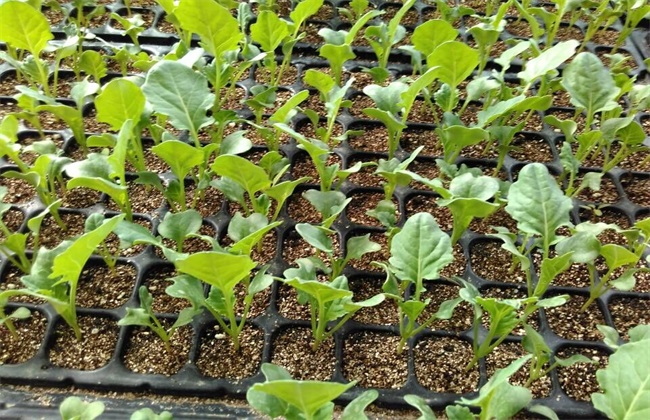
1. Temperature
It has strong adaptability to temperature. It can grow at a temperature of around 5 degrees, though relatively slowly. Then the higher the temperature, the faster the growth, but if the temperature is too high, the quality is poorer and the growth tends to age. So the most suitable growing temperature is 15 to 25 degrees. Germination requires a temperature above 20 degrees. For seedling growth, it can grow well above 15 degrees. Low temperature can complete vernalization. Broccoli is relatively heat-tolerant and also cold-tolerant.
2. Humidity
During the growth process, in order to maintain the normal transport of nutrients and inorganic salts in the broccoli plant, a large amount of water is needed. The leaves need to maintain photosynthesis, and to spread out and stand upright they all need enough water. It cannot lack water; even short-term water shortage will reduce yield. But soil humidity should not be too high. Above 80% makes it prone to rotting-type diseases favored by high temperature and high humidity. However, during the heading stage, soil humidity should be kept close to 80%.
3. Light
Broccoli has relatively broad requirements for light, but it needs sunlight and likes sunlight. Sunlight is conducive to the formation of heads during the rosette stage. With better photosynthesis, nutrients are more abundant, which is beneficial to growth and development. It can also maintain growth vigor and make the curd plump. But strong light easily scorches the curd and causes black spots.
4. Soil nutrients
It has strong adaptability to soil. As long as it is not dry land, saline-alkali land, or extremely barren land, it can survive. But it is best in well-drained soil, and deep soil is conducive to absorbing nutrients. Then the soil texture should be somewhat loose, which is conducive to rapid drainage and prevents water accumulation. Planting is suitable in neutral to slightly acidic soil. Do not apply too much base fertilizer; if over-fertilized, the flower stalks will not be firm. It needs the most nitrogen fertilizer, followed by potassium fertilizer, and the least phosphorus fertilizer. After heading, phosphorus and potassium relatively increase. During the heading stage, trace elements such as boron and molybdenum should be sprayed.
The growth of most plants is directly affected by climate, which determines the growing location and environment. Broccoli also needs to determine its environment according to its own growth needs. When environmental conditions can be controlled artificially, this actually also indirectly controls growth yield and quality.