Detailed Explanation of Key Technical Points for Chive Cultivation and Management
Chive cultivation requires attention to sowing time, or the later division time, and consideration of natural conditions such as temperature and light that affect sowing. How to adjust these factors. In addition, regarding soil treatment for planting, and how to fertilize at each stage, what fertilizer to apply, and what the requirements are. What the specific planting time and water control are. How to handle pests and diseases if they occur in the field. These are all part of cultivation and management. This article mainly introduces the detailed content of chive cultivation and management.
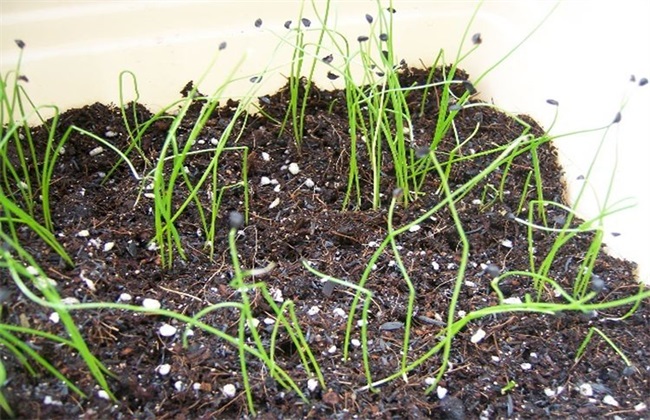
1. Sowing Time
Chive seeds can germinate above 5°C, which is 5°C lower than the germination temperature of small chives. However, above 13°C, germination is fast and uniform. Above 10°C, above-ground leaf growth is normal, and 15°C to 20°C is the best temperature for plant growth. Above 30°C, growth is slow. During low-temperature periods, sowing with film mulching can be used; in winter, temperature-controlled cultivation in facilities can be used; in high temperatures, shading and cooling can be used. Spring and autumn are suitable for open-field cultivation.
2. Land Preparation Requirements
When conditions are limited, poor soil can be improved before planting. For improvement, river sand and sterilized humus soil can be directly mixed with 1600 jin of fully decomposed livestock manure per mu and blended into the field. The original soil can be dug away, or the topsoil can be tilled fine and mixed together. Fertile soil only needs plowing, rotary tilling, weeding, and leveling the soil, then spraying chemicals to kill insect eggs and pathogens. After that, the land should be sun-dried for three days to sterilize it and ensure the safety interval of the chemicals.
3. Fertilizer and Water Requirements
During growth, chives mainly grow leaves and underground rhizomes. Most of the fertilizer should be nitrogen fertilizer, followed by potassium fertilizer, and phosphorus fertilizer the least. Later topdressing should be applied in small amounts multiple times, because the leaves must be kept from drying out and turning yellow throughout the growing period. Since the growth period is short, fertilizer and water management cannot be relaxed. Generally, water once a week, because the root system is small and weak in absorption, and it is also afraid of drought.
Therefore, it is necessary to water multiple times but not too much at once, as it is easy to cause waterlogging.
4. Transplanting Time
When the seedlings grow to about 8 cm, they are divided and transplanted to the field. This ensures suitable planting space in the field and allows rapid large-scale planting. The transplanting plant spacing is 6 cm, and the row spacing is 5 cm. Then the planting depth is 5 cm, the planting row width is 1.2 m, the length is about 5 m, and the row-to-furrow spacing is 20 cm, which is convenient for management. Planting should always be shallow and sparse.
5. Pest and Disease Control
It is prone to infection by soft rot, which produces a foul odor after rotting. In the early stage of the disease, agricultural streptomycin is used to spray the stem base, the part near the ground, and the whole field. If the disease is severe, pull out the plants promptly, take them out of the field, dry them, and burn them. The main pest is the onion aphid, which gathers at the tillering area and causes damage. Later it covers the whole plant. Apply 2 kg of 5% phoxim granules per mu beside the roots. Or spray 1 kg of compound Sophora flavescens insecticide.
These are the management contents related to chive cultivation. The article content is mainly provided for everyone's reference, and I hope it can be of some help to those in need. Thank you for reading and supporting. For more detailed content, you can refer to more sources and consult to obtain it. For other agricultural content, follow for future updates.