What to Do When Soybeans Get Downy Mildew? A Detailed Guide to Prevention and Control Measures
Soybean is an important food crop in China, and downy mildew is a commonly occurring disease during cultivation. It is widely distributed around the world, causing more severe damage especially in high-humidity areas. It can cause serious yield reductions and bring huge losses to farmers. So how should soybean downy mildew be prevented and controlled? Let's take a look together.
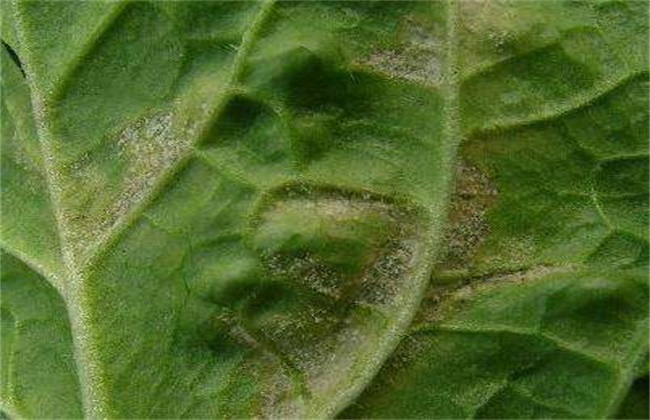
1. Disease Symptoms
Downy mildew mainly affects soybean seedlings, leaves and seeds, with seeds having a relatively high incidence rate. Sowing with infected seeds will cause seedlings to become diseased. After infection, the first true leaf will show faded green lesions at the base of the petiole. As the disease spreads to the entire leaf, the leaf turns yellow, and mold also appears on the back, which is the sporangia of the pathogen. Climate change also has a certain impact on the development of the disease. Damp climate will aggravate the development of the disease, and the mold layer will be relatively thicker. When the disease is severe, seedlings cannot become established, and death occurs in the early stage; dry climate will slow the disease, and the mold layer may not even appear.
2. Transmission Pattern
The pathogen survives in diseased grains and tissues. After safely overwintering, it produces zoospores that attack the seedlings. As the soybean grows and the mycelium increases, it gradually harms the true leaves and axillary buds. The probability of seedlings being infected is affected by temperature. When the temperature is below 13°C, the incidence rate is about 40%, while when the temperature is above 18°C, the disease basically does not occur. After the disease develops, the seedlings carry relatively large sporangia, which spread to other plants through wind and rain, causing the leaves of other plants to become diseased. After the sporangia land on the leaves, they infect the epidermis and grow in the intercellular spaces, with the mycelium continuously increasing. When the fungus invades the interior of the plant, faded green lesions appear, and sporangia form in about 1 week, continuing to expand the scope of infection. Light also has a relatively large impact on the germination of the pathogen's sporangia. The longer the light duration, the faster the germination; the shorter the light duration, the slower the germination. In wet and rainy years, downy mildew is more severe. It generally begins to occur in mid-to-late June, with the peak period in July-August.
3. Prevention and Control Measures
Downy mildew is parasitic, so varieties with strong disease resistance should be cultivated. Screening seeds before sowing can reduce the incidence rate by removing some diseased seeds and preventing their seedlings from becoming infected. It is best to select seeds on disease-free days, and seed dressing with chemicals can also be used to avoid pathogen infection. When the disease appears, chemicals should be applied promptly for propagation. Commonly used and effective chemicals include 65% zineb wettable powder at 500 times dilution and 50% tecloftalam wettable powder at 800 times dilution, etc. The chemicals should be sprayed evenly. At the same time, avoiding continuous cropping on the same field, carrying out reasonable crop rotation, increasing the application of phosphorus and potassium fertilizers, and promptly draining accumulated water also help alleviate the occurrence of downy mildew.
The above is an introduction to the prevention and control measures for soybean downy mildew. We hope it can help you. To learn more related knowledge, please stay tuned to us.