What issues should be noted when planting soybeans in continuous cropping?
We know that any crop will run into problems as soon as it is repeatedly grown in continuous cropping, and the common problems are soil nutrient imbalance, worsening pests and diseases, and serious yield reduction. Below, the editor brings you the issues to note in continuous soybean cropping. Let's take a look together.
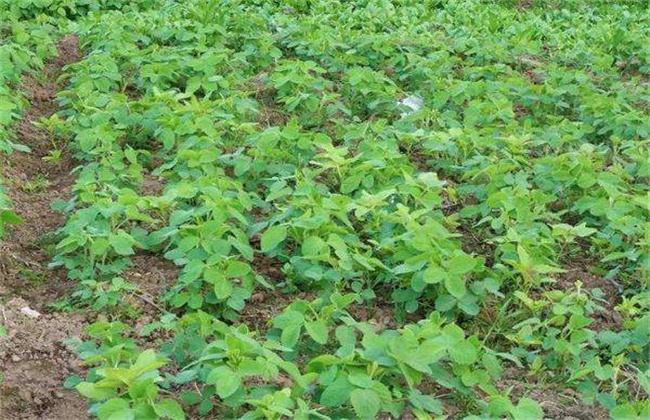
1. Worsening pests and diseases
The most common problem with continuous soybean cropping is worsening pests and diseases. The pathogens and insect eggs from the previous crop parasitize in the remaining stubble, weeds and soil, and after replanting, as temperatures rise, they begin to break out, becoming more serious year after year. Common diseases include bacterial spot disease, black spot disease, damping-off, and yellow wilt, among which nematode disease is the most serious. Nematode disease mainly damages the root system, causing poor plant growth; in the later stage the root system becomes necrotic, causing premature aging of the plants, leading to serious yield reduction, and in severe cases it may cause total crop failure.
2. Microbial toxicity
When the soybean root system absorbs nutrients and water, it also secretes an acidic substance. This substance is a toxic substance and has a huge impact on soybean growth. If it is rotation, there is less toxic substance remaining in the soil, so the impact on the plants is not great; but if it is continuous cropping on the same land, the content of this toxic substance in the soil is relatively high, which will seriously affect the normal nutrient metabolism of soybeans, lead to poor root system growth and development, make rhizobia less active, inhibit plant growth, and cause yield reduction.
3. Nutrient imbalance
Because continuous soybean cropping on the same land causes phosphorus in the soil to be excessively consumed, the effective nitrogen-to-phosphorus ratio loses balance, affecting soybean growth and development. Moreover, the content of other trace elements will also gradually decline, causing problems such as yellowing and drying leaves, poor growth, and short plants in soybeans. These are mostly caused by nutrient deficiency in soybeans. Therefore, in soybean production, repeated cropping on the same land should be avoided as much as possible, and it is best to implement a rotation pattern of more than three years with other crops.
4. Yield reduction from repeated cropping
Is it a part-time job? Generally, continuous soybean cropping on the same land reduces yield by about 6%-11% compared with normal rotation, while one year of repeated cropping reduces yield by about 10%-16%, two years of repeated cropping reduces yield by about 14%-24%, and three years reduces yield by more than 30%.
The above is an introduction to the issues to note in continuous soybean cropping. We hope it can help you. To learn more related knowledge, please follow us.