What to Do About Radish Seedling Death? A Detailed Guide to Practical Control Methods
Radishes are grown over an extremely wide area in China, but during the cultivation of radishes, the phenomenon of radish seedling death often occurs, which gives farmers a severe headache. So what should be done about radish seedling death? Below, the editor will share with you the control methods for radish seedling death. Let's take a look.
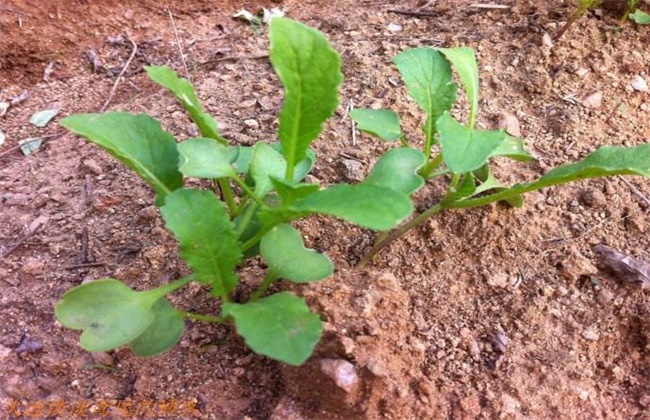
1. Crop Rotation and Stubble Change
Radishes are not suitable for continuous cropping, so rational crop rotation is needed, and the farming system of rotation and stubble change must be put into practice. At the same time, the number of times and the amount of insecticides used should be reduced, soil permeability should be increased, soil vitality should be improved, and herbicide residues should be reduced. After planting radishes, management should be strengthened: apply whatever nutrient elements are needed, apply well-rotted fertilizer in the amount required, increase the residual amount of fertilizer in the soil, restore soil vitality, and improve the soil environment.
2. Temperature Control
The suitable temperature for radish germination is around 20 degrees. During the seedling stage, radishes can tolerate low temperatures of around 5 degrees and can also endure long periods of sub-zero low temperatures for an extended time. However, short periods of high temperature and low temperature are extremely beneficial for radish seed germination. The suitable temperature for leaf growth is 20 degrees, and the suitable temperature for fleshy root growth is around 16 degrees. Once the temperature is below 20 degrees, radish growth becomes weak and thin, and the yield is relatively low. Therefore, in the later stage of radish growth, plastic film mulching cultivation can be used so that radish seeds can flower and absolutely no seedling death occurs. Seeds need to be disinfected, and attention should be paid to temperature adjustment during the seed growth period.
3. Fertilizer Use
Fertilizer is very effective in preventing radish seedling death. A special-effect foliar fertilizer dedicated to preventing radish seedling death and yield reduction can be used to prevent radish seedling death and root rot. After radish harvest, when using herbicides, after emergence at the three-leaf-one-heart stage, and when the lower part of the root system begins to swell, these three stages should be used to carry out three separate applications by spraying on the ground and on the leaves, which can produce unexpected effects. Fertilizer should be used rationally: apply the appropriate fertilizer for whatever nutrient elements are needed, and the amount of fertilizer applied should be based on soil fertility and the growth condition of the radishes. At the same time, when spraying the special-effect foliar fertilizer, combining it with New High Lipid Film can not only increase soil permeability and improve soil vitality, but also reduce pesticide residues.
The above is an introduction to the control methods for radish seedling death. I hope it can help you. To learn more related knowledge, please keep following us.