How to grow over-summer radishes for high yields? Detailed growing techniques
Radishes are generally planted in autumn and marketed in winter, but in recent years over-summer cultivation has been relatively successful, and since the harvest period falls right in the August-September vegetable off-season, the returns are relatively high and the growing prospects are good. However, the high temperatures and frequent rain in summer are bad for radish growth, and yields are lower than with autumn cultivation, so how can over-summer radishes achieve high yields? Let's take a look together.
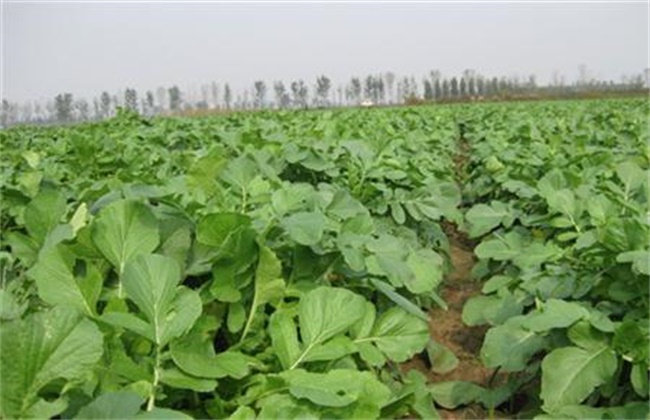
1. Select excellent varieties
Summers are hot and rainy, which is bad for radish growth, so the varieties grown should preferably be those with good heat tolerance, drought tolerance, strong resistance to pests and diseases, and the ability to form fleshy roots under high-temperature conditions. Relatively good varieties include Re Bai, Xiao Gou Bai, Xia Chang Bai No. 2, Dongfang Huimei, Xia Kang 40 Days, and others.
2. Soil preparation and fertilization
It is best to choose flat terrain with deep soil, good drainage and good water retention, and sandy loam soil. After harvesting the previous crop, promptly clear the weeds and crop residues from the field, then apply 4000 kg of fully decomposed barnyard manure, 15 kg of potassium sulfate and 30 kg of superphosphate per mu, plow deeply to prepare the soil, rake it fine and level it, then carry out ridge cultivation with a ridge spacing of 80 cm and a ridge height of 15-20 cm, and a plant-to-row spacing of 20×20-25 cm.
3. Sowing
The sowing time for summer-sown radishes can be arranged in batches from June to August according to market demand. Large varieties are best sown in holes, with a hole depth of 1.5-2 cm and 2-3 seeds per hole; after sowing, cover with a 2 cm layer of finely sieved soil. Medium varieties can be sown in holes or in drills; when sowing in drills, the furrow depth should be 2-3 cm. Small varieties can be broadcast sown. Generally, large varieties use about 0.5 kg of seed per mu, medium varieties 0.75 kg, and small varieties 1.5-2 kg.
4. Field management
After emergence, thin the seedlings in time to ensure uniform and strong seedlings. The first thinning is done when the cotyledons are fully expanded, and the second thinning is done when the seedlings have 2-3 true leaves. When the seedlings grow 5 true leaves, they can be set in place. Carry out cultivating and weeding together with thinning; when cultivating, go shallow first and then deep, so as not to damage the seedling roots. Summer temperatures are high and water evaporates quickly, so water timely and in appropriate amounts according to soil moisture and the growth characteristics of the radishes. Generally, during the seedling stage, water three times, and during the vigorous growth stage, the number of waterings and the amount of water should increase as the radishes grow. Radish growth cannot do without fertilizer. After the seedlings are set in place, apply 8-15 kg of urea per mu flushed with water to promote leaf growth; when the fleshy root shows its shoulder, apply 5-10 kg of urea, 10 kg of potassium sulfate and 3-5 kg of superphosphate flushed with water to promote the expansion of the fleshy root; when the fleshy root is expanding, foliar fertilizer can be used to promote the expansion of the fleshy root.
The above is an introduction to high-yield growing techniques for over-summer radishes. We hope it can help you. To learn more related knowledge, please stay tuned to us.