Detailed Guide to Yellow Chive Cultivation Techniques: Growing Methods and Management Key Points
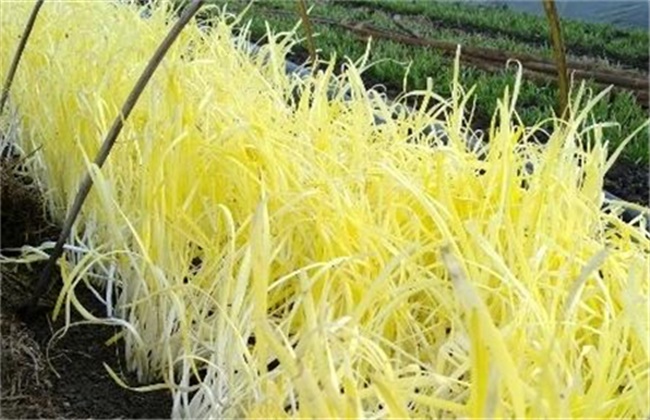
Yellow chives are the product of garlic chives that have turned yellow through blanching cultivation, also known as chive sprouts. They grow entirely in a dark environment, so they cannot synthesize chlorophyll, which is why the leaves are yellow. So how should yellow chives be cultivated? Let's learn about it together with the editor.
1. Land preparation and bed making
First, select the land and quality. Garlic chives have strong adaptability and do not demand much from the soil, but try not to choose continuous cropping land or land previously planted with scallions or ginger. The seedling bed is 1-1.4 m wide. During land preparation, apply no or little base fertilizer, plow the soil about 30 cm deep, then use a rake to level it and tread it flat. For the planting bed, prepare the bed on dry land, open furrows in the dry bed and water. Generally, the bed is 2.2 m wide, 30 m long, with a bed width of about 1.4 m.
2. Sowing and seedling raising
Before sowing, first treat the seeds by soaking them in warm water not exceeding 53°C. Stir continuously while soaking until the temperature drops to room temperature, then stop. After soaking for 1 hour, mix the seeds with 2-3‰ carbendazim wettable powder for seed dressing and set aside. Before sowing, water the seedling bed thoroughly, then sow the seeds evenly. After sowing, cover with sieved topsoil 0.5-1 cm thick, immediately level it, spray with herbicides such as hexazinone, cover with plastic film, and press the sides firmly with soil. Generally, 2.5 kg of seed is used per mu.
3. Seedling stage management
When 80% of the yellow chives have emerged, remove the plastic film promptly. When the seedlings grow to 2-3 leaves, thin them once. When they grow to around 5 leaves, water every 5-7 days, and at the same time apply urea as a top dressing with irrigation twice at 7.5-12.5 kg per mu. Stop watering 5-7 days before transplanting.
4. Planting
When planting, ensure the soil moisture of the bed is moderate. Apply 10,000 jin of farmyard manure per mu, along with 20 kg of biological fertilizer, 20 kg of urea or diammonium phosphate, 150 kg of superphosphate, and 35 kg of potassium sulfate, and mix the fertilizer and soil thoroughly. When the yellow chives grow 4-5 leaves, they can be transplanted. Transplant at a reasonable density, and the planting depth should be appropriate. After planting, spread 5% phoxim granules and 25% carbendazim wettable powder along the ridges over the chive roots to prevent pests and diseases. Yellow chives have a high demand for fertilizer and water during growth, so fertilize reasonably according to different stages.
The above is an introduction to yellow chive cultivation techniques. We hope it helps you. For more related knowledge, please stay tuned to us.