Detailed Explanation of Key Points of Sugar Beet Cultivation and Management Techniques
Sugar beet is an important sugar crop besides sugarcane, and sugar beet leaves are an excellent vegetable. It is generally a biennial plant, and some varieties of sugar beet leaves can be used as a forage crop, making it a very good economic crop. So growing sugar beet is a great agricultural project, and the key to growing sugar beet well lies in the cultivation and management techniques that this article focuses on. Please read on to learn more.
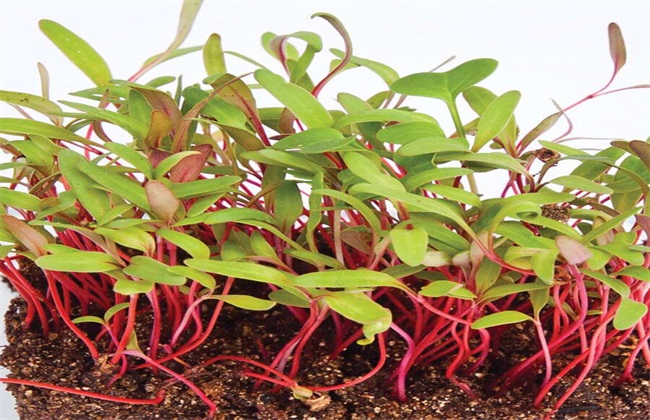
1. Thinning
Generally, sugar beet is sown evenly directly in the field, and after the seedlings emerge, thinning is carried out to determine the specific spacing between seedlings. Generally, once the seedlings reach about 5 cm, thinning can be done. Remove weak seedlings, diseased seedlings, or small seedlings. Thin more in dense areas. About 4000 seedlings are planted per mu of land.
2. Tillage and Weeding
After thinning, carry out one intertillage with a depth of about 5 cm, and then during the extra season, till once every one or two weeks at a depth of about 4 cm. During tillage, weeds can be pulled out at the same time, then piled up together to decompose and applied to the field. Intertillage can reduce pests and diseases.
3. Irrigation
In the early growth stage, high humidity makes brown spot disease likely to occur, so in the early stage, water once a day for 7 days after the seedlings emerge, and after 7 days, water once every two to three days. After two weeks, water once a week, which can be decided by looking at the soil moisture content. If it rains during this period or the soil humidity is 50%, watering can be skipped. After one month, it can rely on rainwater, and water once when the soil is dry. In drought, water promptly at night, with a small amount each time to prevent root cracking.
4. Fertilization
In the early stage of plant growth, mainly apply some nitrogen fertilizer or compound fertilizer. The main topdressing period is during the root swelling stage. At this time, spray potassium dihydrogen phosphate every half month, 200 grams per mu. This is mainly to ensure the nutrients needed for normal root swelling. For this kind of fertilization, farmyard manure can also be applied as topdressing, applied in furrows, 800 jin per mu, and then it can maintain the nutrition of the entire plant throughout the swelling period, as well as some trace elements.
5. Harvesting and Storage
Start harvesting when the temperature is about 5°C, mainly harvesting the root tuber. When digging, be careful not to damage the root stem, and after digging out, clean it promptly and take it back, do not expose it to the sun in the field. Harvesting is best done on a cloudy day with no dew. After harvesting, the upper part of the root and the tail part of the root need to be cut off. It can be stored fresh in the field by covering with soil.
That is all about sugar beet cultivation and management. Generally, doing the above well can increase your yield and income, but more specific and detailed management may still be needed to be more effective. No more elaboration here. Thank you for reading and supporting, you can refer to this for learning.