What are the propagation methods for quinoa? A clear explanation of the key technical points in one article
The quinoa plant resembles lamb's quarters (Chenopodium album), and its seed head resembles a sorghum panicle. It originated in the mid-altitude regions of the Americas, but it has a wide growing range and can also be grown and will grow on plateaus. At present, the planted area of quinoa in China is not large, but quinoa contains a variety of unique nutrients and is a high-protein, low-sugar health food. At present, the economic benefits of growing quinoa should be very good. The propagation method commonly used for growing quinoa now is sowing propagation, just like wheat and other grain crops. The method and process of sowing quinoa are the specific content mainly described in this article.
1. Land selection
Quinoa likes sunlight, so it should be planted in a sunny place with somewhat higher terrain. Do not plant it in paddy fields. Make sure the soil is air-permeable and retains fertilizer. The planting site should have good ventilation, but it should not be in an upwind position, as it is prone to lodging. The soil should be deep to facilitate root growth and nutrient absorption. The previous crop is best if the land was previously planted with sweet potato or similar crops.
2. Land preparation
After the beginning of spring, the soil can be turned and a large amount of base fertilizer applied, with some manure and plant ash mixed and buried underground. By half a month before sowing, the land can be finely tilled, and the soil should all be broken up finely during tilling. Do not plow the soil below; till the upper layer of soil finely, keep it loose, then apply some compound fertilizer, mix it with the soil, level the soil, spray a disinfectant, and sun-dry the land for later use.
3. Seed treatment
The seeds do not need to be soaked to promote germination and can also be sown directly. However, in order to make the seeds germinate uniformly, grow consistently, and sprout faster, they can be soaked in 45°C warm water for 30 hours, then soaked in 25°C warm water for 25 hours, taken out, drained of water, wrapped in a clean cloth, and placed in an insulated box at about 25°C to promote germination. After about three days they will sprout, and when 90% have sprouted they can be sown. For direct sowing, to prevent underground pests from damaging and eating the seeds, the seeds must be treated with a chemical agent to ensure smooth germination.
4. Sowing
Quinoa is generally sown in May; in warm regions it can be sown as early as April, with about two jin of seeds sown per mu. Sowing should be done in holes: dig a small hole every 10 cm along straight lines, sow 2 to 3 quinoa seeds per hole, and after sowing cover with 2 cm of soil to prevent wild animals from digging out and eating the seeds. This is also beneficial for germination. The distance between each row should be about 30 cm.
5. Management after emergence
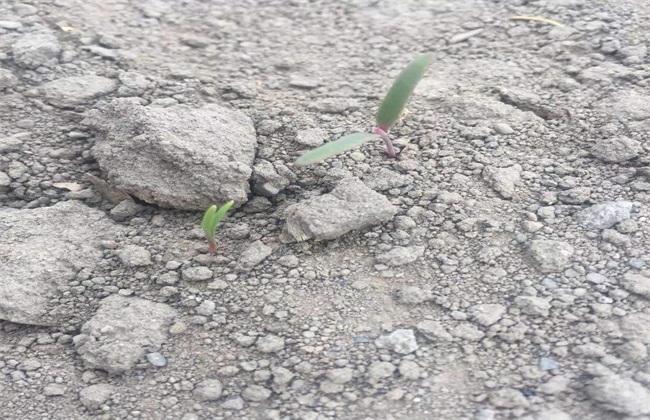
After emergence, inspect and, where no seedlings have emerged, replant once and reseed once; replanting should be done on a cloudy day without rain. Water promptly after emergence, once a day, to promote growth. One week after emergence, the amount of watering needs to be reduced to avoid disease. After that, the seedlings can be hardened off by not watering and not fertilizing; hardening off for one week is enough.
The propagation method for quinoa is sowing propagation. The whole sowing process is the specific content described above. There may also be some specific details that need to be discovered and summarized in actual production to improve the propagation method. I hope that after reading this it will be of some help to everyone.