Detailed Explanation of the Key Technical Points for Seed Sowing and Seedling Cultivation of Eucommia ulmoides
Eucommia ulmoides is a medicinal plant that contains a variety of amino acids and minerals, as well as many trace element components. It is a precious medicinal herb in our country, has great economic value for pharmaceutical production, can help more patients, and can also be used to produce many health care medicines. Growing Eucommia ulmoides is mainly done through seed sowing and seedling cultivation, which can pass on good morphological characteristics and provides a relatively high guarantee of planting yield. Therefore, the key technical points for seed sowing and seedling cultivation of Eucommia ulmoides are introduced here.
I. Seed Treatment
Eucommia ulmoides seeds contain a component called eucommia rubber, so they have strong adhesion and do not germinate naturally very easily, requiring artificial germination promotion. For Eucommia ulmoides, the commonly used method of germination promotion is the sand stratification method. Dig a pit about 1 m deep in a high, wind-sheltered, sunny location, then place 10 cm of sand at the bottom of the pit, then mix the seeds evenly with sand, with the sand being about three times the amount of the seeds. Put them into the pit, then cover with 15 cm of sand. Note that the edges all need to be separated with rice straw to allow air circulation, and about 20 cm of soil should also be covered on top. After about one week, they will sprout. Screen out the sand with a sieve before sowing, but if some have not sprouted, soak them again in 20°C warm water for one day.
II. Land Preparation
First choose a sandy loam soil with a deep soil layer, shelter from wind and sun, good water and fertilizer retention, and loose permeability for planting. When sowing, first turn the soil and plow deeply, then rotary till the soil finely and break up large clods of earth. Finally, apply base fertilizer well at about 1000 jin per mu, mix it with the soil, and then cover the surface with 10 cm of topsoil for planting needs, and finally level the land.
III. Sowing
For the sowing time, it is best to sow in spring in April and autumn in October each year, when the temperature and humidity are suitable and seedlings emerge and survive easily. For sowing, dig furrows for row application. Generally, it is good to dig furrows 10 cm deep and 30 cm wide. Water in the furrow and, after it seeps through, directly broadcast evenly in the furrow, and finally cover with soil to the extent that seedlings can emerge. The furrow spacing can be about 20 cm, enough for a person to pass through. About 200 to 400 jin of seeds are sown per hectare.
IV. Seedling Stage Management
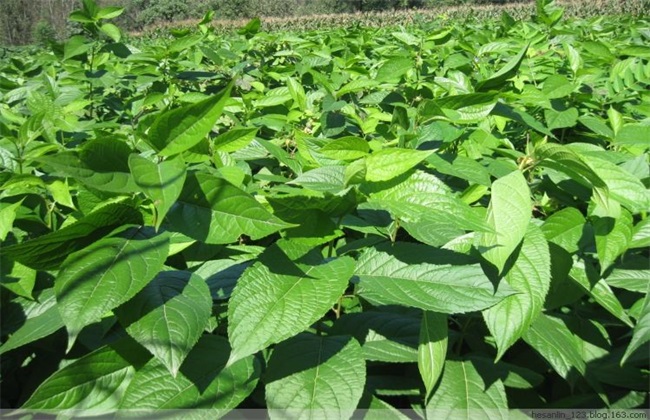
At about 20 days after emergence, when the seedlings have grown about 5 leaves, begin checking and filling in missing seedlings. Fill in seedlings carefully on cloudy days, and do it early so they can catch up with the previous growth period. The direct growing distance between seedlings should leave a gap of about 2 cm. Fertilization should be combined with watering. For autumn planting, water less and fertilize less, and do not provide shade, as Eucommia ulmoides has relatively strong resistance.
The above is the process of growing and raising seedlings of Eucommia ulmoides. Seedling cultivation is the key to planting; only when seedlings are raised can planting be carried out, and only when good seedlings are raised can the good growth of Eucommia ulmoides be ensured. Proficiency in seedling cultivation is what enables efficient seedling cultivation on a large scale, can shorten the seedling cultivation time, and can produce a large number of seedlings in a short time.