Cultivation Techniques and Management Methods for Purple Flowering Stalk
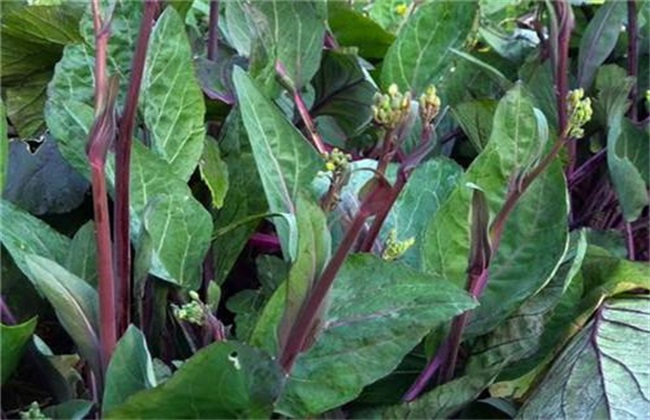
Purple flowering stalk, also called red flowering stalk, is a variety of bok choy in the Brassicaceae family. It is a perennial vegetable, mainly grown for its flowering stalks, and is primarily cultivated in the Yangtze River basin. As soon as this new type of vegetable hit the market, it was loved by many people, and then, therefore, large-scale promotion and planting began. The details of the process of planting red flowering stalk will be introduced in detail in the article below.
1. Seed selection
There are many cultivars to choose from. Select cultivars that suit the local environment, have strong adaptability, and show excellent genetic traits. For open-field cultivation in early spring, choose mid-to-late maturing types, such as 'Yanzhihong' red flowering stalk; for planting in early to mid-April to May, choose early maturing cultivars, such as 'No. 2' red flowering stalk; for sowing in early May, choose 'Erzaozi' rapeseed.
2. Site selection
Choose deep, fertile, well-drained sandy loam with good aeration, fertilizer retention, and water retention for raising seedlings and planting. First turn the soil; turning to 20 cm is enough, as the roots will not go too deep. Then fine-till the soil so there are no large clods and no compaction. It is best to spray a fungicide such as carbendazim on the seedbed. The seedbed is best at 1.2 m wide and about 5 m long.
3. Sowing
For sowing, you can directly broadcast the seeds evenly on the seedbed, then cover with clean soil [in] cm. Spray water to soak the seedbed thoroughly, then cover with a shade net or dry rice straw to provide shade and keep warm. After that, water once a day; after germination, water once every two days to avoid damping-off or seedling blight during the seedling stage. After the seedlings emerge uniformly, thin them once, removing weak and diseased seedlings, then harden the seedlings by withholding fertilizer and water. After one week of hardening, apply more fertilizer and water, and transplant when two true leaves have grown.
4. Transplanting
Water thoroughly one day before transplanting to make lifting the seedlings easier without damaging the roots. In addition, one week earlier, apply fertilizer mixed with water once to ensure the survival rate after transplanting. Transplant on an overcast day, or light rain is also fine, to avoid excessive transpiration. Also, the soil in the transplanting field should not be too dry; irrigate appropriately three days before. There will be about a one-week slow seedling period, during which do not water or fertilize. Wait until growth has recovered for a period before topdressing.
Growing red flowering stalk shares similarities with growing other vegetables, but there are also differences, and the planting process should follow its characteristics. For example, red flowering stalk seeds are small and thin-skinned, so they can be direct-sown; do not soak the seeds to promote germination, as they can also germinate quickly in the field. The above operational details can be used for reference reading.