Detailed Explanation of Key Field Management Techniques for Bell Peppers
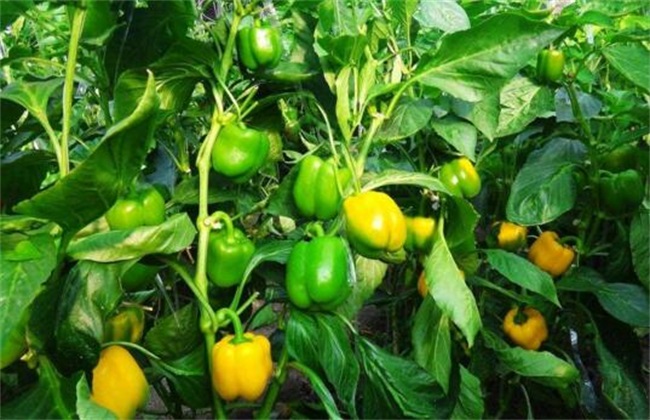
Bell pepper, also called lantern pepper because its appearance resembles a lantern, is a variety of chili pepper and comes in many colors. It can now be planted in both northern and southern regions. After planting bell peppers, their management work differs from that of other chili peppers, so the specific management aspects and methods will be discussed below.
I. Temperature and Humidity
Temperature and humidity regulation mainly needs to be adjusted in two stages. The first stage is the seedling recovery stage, which should be accelerated. After transplanting, the daytime temperature should be maintained at 28 to 30 degrees, the nighttime temperature should not be lower than 25 degrees, and the humidity should be kept at around 70% to 80% throughout. The second stage is from after seedling recovery to before flowering. During this period, the daytime temperature should be 20 to 25 degrees, the nighttime temperature 18 to 20 degrees, and the humidity should be kept at 50% to 60%. This can prevent excessive vegetative growth caused by high temperature and high humidity.
II. Plant Adjustment
The main adjustment is pruning. The most common method now is two-stem pruning, keeping two vigorous branches on the main stem, maintaining the side branches growing upward, and removing excess side branches. Then small branches are kept on the side branches, generally in opposite pairs, not staggered. Keeping 4 levels of side branches is about enough for the whole plant. The lowest branches can be removed after flowering to save nutrients.
III. Fertilizer and Water Management
The usual soil humidity should be maintained at around 80%. The required humidity is relatively high, so drip irrigation can be used continuously for long-term penetration to maintain humidity; otherwise, watering may consume a large amount of labor. The lowest branches can be given a topdressing shortly after flowering. Generally, the topdressing is a formula fertilizer of 69 jin of phosphate fertilizer, 40 jin of nitrogen fertilizer, and 20 jin of potassium fertilizer. Then, during the fruiting period after flowering, each time a batch of bell peppers is set, nitrogen, phosphorus, and potassium fertilizers should be applied once until the end of fruiting. In the later stage, farmyard manure should also be applied once more, which can extend the fruiting period.
IV. Fruiting Management ⟧11⟧Remove some old leaves at the base, which can increase ventilation and light penetration, and can also reduce some environmental humidity and temperature. During the fruiting period of bell peppers, watering should be reduced to avoid flower and fruit drop. Then, after the first fruit harvest, fertilizer should be applied in a timely manner and in larger amounts, and a fruit-stem-strengthening agent should also be sprayed to prevent flower drop. In greenhouse cultivation, supplemental lighting can be started to improve photosynthesis. If rain occurs during the flowering period, drainage should be carried out promptly, and humidity should be reduced inside the shed.
Remove some of the old leaves at the base, as this increases ventilation and light penetration, and it can also lower the ambient humidity and temperature somewhat. During the fruiting period of sweet peppers, water less to avoid flower and fruit drop, and then after the first fruit harvest, fertilize in time, fertilize more, and also spray Zhuangdiling to prevent flower drop. In greenhouse cultivation, you can start supplemental lighting to enhance photosynthesis. If it rains during the flowering period, drain the water promptly, and inside the greenhouse you need to reduce the humidity.
The management of bell peppers after planting has similarities with that of other chili peppers, but also many differences. Therefore, when growing bell peppers yourself, the later management can be referenced and compared, but the specific management details should be determined according to the local growing environment and the plants' growth conditions.