What kind of growing environment does wheat cultivation require?
Wheat is a major food crop in the world and can be processed into a wide variety of foods. In China it is mainly grown on a large scale in the north, with smaller planting areas in other regions. Like other plants, growing wheat has several main requirements for the environment: temperature, water, light, nutrients and soil. Generally, the corresponding environment should be provided according to the growth characteristics of wheat.
1. Temperature
The suitable growing temperature for winter-type varieties is 16 to 18 degrees, and the germination temperature is between 8 degrees and 16 degrees; the suitable temperature for semi-winter types is between 14 and 16 degrees, and the germination temperature is 5 degrees to 14 degrees; the suitable growing temperature for spring-type varieties is around 12 to 14 degrees, and the germination temperature must reach above 3 degrees. The lower the temperature, the earlier the sowing. Generally, growth is poor when the temperature is above 25 degrees.
2. Water
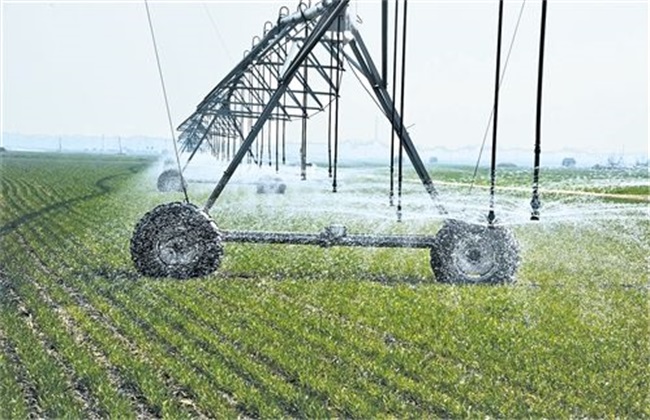
Wheat plants need a large amount of water for growth and grain formation, and about 40% of the irrigation water evaporates from the ground surface. This means that when irrigating, besides supplying the amount of water wheat needs, extra water must be applied to make up for evaporation in order to meet growth demands. Apart from rainfall, irrigation must be carried out in large amounts and many times.
3. Fertilization
Before sowing, sufficient farmyard manure needs to be supplied as base fertilizer. Generally, barnyard manure, mild livestock manure, or manure composted with straw is most suitable, and about 1000 jin should be applied per mu. Topdressing is mainly chemical fertilizer. In addition to the major elements nitrogen, phosphorus and potassium, carbon, hydrogen and oxygen, which are the main elements forming wheat dry matter, must be sufficient, otherwise empty shells are easily formed.
4. Light
Wheat is a long-day plant and is sensitive to light. Generally, growth requires 12 hours of light per day, and heading cannot occur with less than 12 hours of light. Insensitive wheat types can flower and head with 8 to 12 hours of light. In short, with sufficient light, tillering increases, and flowering, heading and grain formation are better.
5. Soil
Wheat is not strict about soil and has strong adaptability, and it grows better in neutral acidic or alkaline soil. It needs soil with good fertilizer and water retention. The soil's fruiting layer is required to be well developed with a relatively good structure, so that drainage and aeration are good. It needs to be planted in fertile soil, and grain formation requires a large amount of fertilizer nutrients.
Wheat growth requires fertile soil, neutral pH soil, low-temperature planting, sufficient long-day sunlight, and adequate irrigation and nutrients. This is the best growing environment for wheat. In this way it will grow even better, and if conditions allow, conditions should be created as much as possible for planting.