How to manage zucchini during the fruiting period? Master all the practical tips
Zucchini is a common vegetable grown in both northern and southern China, with a long history of cultivation, and the fruiting period of zucchini is the most important stage of its growth. How should it be managed during this period? Let's take a look below at the management tips for the zucchini fruiting period.
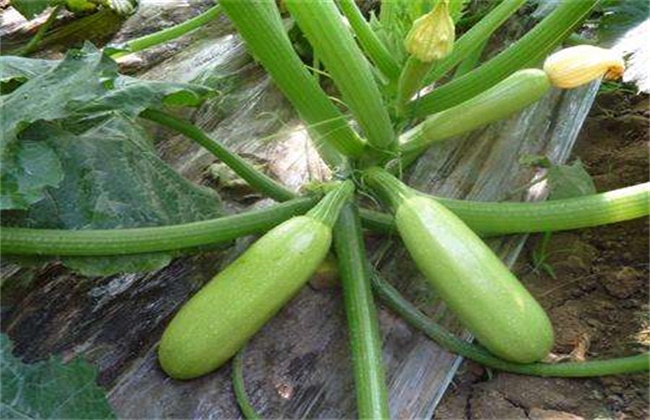
1. Leaf removal
As the plant continues to grow, the number of leaves increases, which can easily lead to a closed, dense field with poor air circulation and light penetration, making it highly susceptible to pathogen infection and causing outbreaks of damage. Therefore, leaves should be removed reasonably, and leaf removal should be based on the plant's growth vigor. Vigorous plants can have more leaves removed, while weaker plants should have fewer leaves removed, with the goal of maintaining good air circulation and light penetration in the field. To avoid the stem being slow to heal after injury, it is recommended to remove leaves rather than pick diseased ones, because the petioles are thick and brittle. Leaves can be removed at the base; creating a large wound on the stem makes it hard to heal. Leaves can be removed entirely or mostly, which helps the petiole dry up and fall off more quickly. In addition, after leaf removal, it is best to choose consecutive sunny days to help the wounds heal. After leaf removal, streptomycin can be sprayed to prevent pathogen infection.
2. Fruit thinning
For zucchini, the most suitable time for fruit thinning is the day before flowering or on the morning of the flowering day. Greenhouse-cultivated zucchini grows under short-day and low night-temperature conditions, which favors female flower formation. Generally, female flowers appear when the plant grows to 3-4 true leaves. However, if too many female flowers are allowed to grow and develop, they will consume a large amount of nutrients, affecting normal plant growth and fruit development, causing a large number of fruits to drop and seriously reducing normal yield. Therefore, they should be thinned in time to reduce nutrient competition and promote fruit set. The number of female flowers to thin depends on the growth vigor of the vine. For weak plants, the root fruit should be thinned first, leaving one female flower every three nodes; for robust plants, the root fruit can be kept, but it should be harvested early, and afterward about one female flower should be left every two nodes.
3. Vine lowering
In the later stage of zucchini fruiting, the plants are tall, and some can even exceed 2 m, which brings great inconvenience to harvesting and spraying. Therefore, the vines should be lowered at the appropriate time. The stems and vines that touch the ground can be covered with soil to promote the growth of new adventitious roots, improve the root system's ability to absorb fertilizer and water, delay plant senescence, and increase later-stage yield.
The above is an introduction to management tips for the zucchini fruiting period. We hope it helps you. To learn more related knowledge, please stay tuned to us.