Key Technical Points for Growing Green Peppers and Field Management Methods
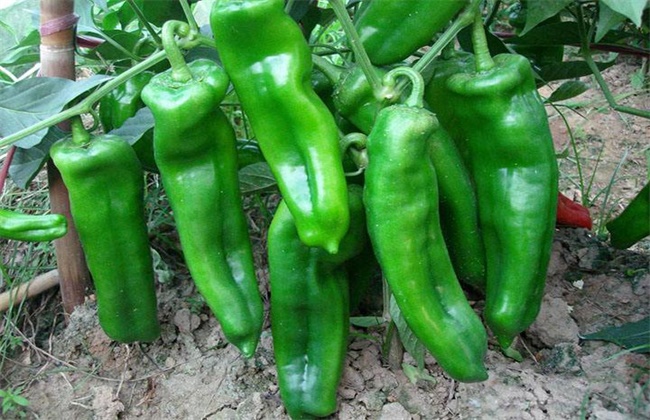
Green peppers are red chili peppers collectively referred to as peppers. Compared with ordinary peppers, their characteristics are larger fruits, milder pungency, or even no pungency at the base, and they are mostly eaten as a vegetable rather than used as a seasoning. At present, they are widely cultivated throughout the country, so how should green peppers be grown? Let's find out together.
1. Land selection and fertilization
Choose loam soil that is fertile, rich in organic matter, loose, well aerated, and deep, with level terrain and convenient drainage, and that has not been planted with nightshade vegetables or potatoes within 3 years. Deep plow in autumn, break up and level the soil finely, and apply 5000 kg of decomposed farmyard manure, 50 kg of nitrogen-phosphorus-potassium compound fertilizer, or 50 kg of ammonium bicarbonate, 50 kg of superphosphate, and 25 kg of potassium sulfate per mu. Apply in furrows promptly before mulching, with the furrow depth around 20 cm.
2. Sowing and raising seedlings
Before sowing, soak the seeds to promote germination, increase the germination rate, and shorten the seedling stage. First soak the seeds in clean water and wash off the mucilage on the seed surface, then soak them in 55-60 degree water while stirring constantly. After the water temperature drops to room temperature, soak for 5-6 hours, remove and air-dry slightly, then place at 28-30 degrees to promote germination, rinsing once a day. After 3-4 days, when most seeds have sprouted, they can be sown. For seedling cultivation, nutrient soil blocks or direct sowing can be used. After sowing and emergence, supplement water appropriately to prevent drought, avoid high temperatures, and apply a suitable amount of quick-acting fertilizer.
3. Transplanting
When the seedlings are 10-15 cm tall and have 5-6 true leaves, they can be transplanted. Water thoroughly one day before transplanting, then cut into blocks and transplant with soil. Green pepper plants are compact and have great potential for rational close planting, which helps them close the rows early, keeps the roots from being easily exposed to the sun, protects the roots and plants, and reduces viral disease. Generally, 4000 holes are planted per mu.
4. Field management
During the rainy season, drain water promptly to avoid waterlogging and root rot, and during drought, irrigate promptly to meet the plant's growth needs. Green peppers must be topdressed appropriately to supplement nutrients and ensure the needs of growth and development. Generally, topdressing is needed three times: the first after transplanting and seedling recovery, the second during the young fruit expansion stage, and the third after harvest. Each time, apply 8-10 kg of urea, using deep hole application, with holes about 10 cm deep. Combined with soil fertilization, foliar fertilizer can also be sprayed, using a mixture of 1-2% superphosphate, 0.2% potassium dihydrogen phosphate, and 0.1% urea.
The above is an introduction to green pepper growing techniques. We hope it helps you. To learn more related knowledge, please follow us.